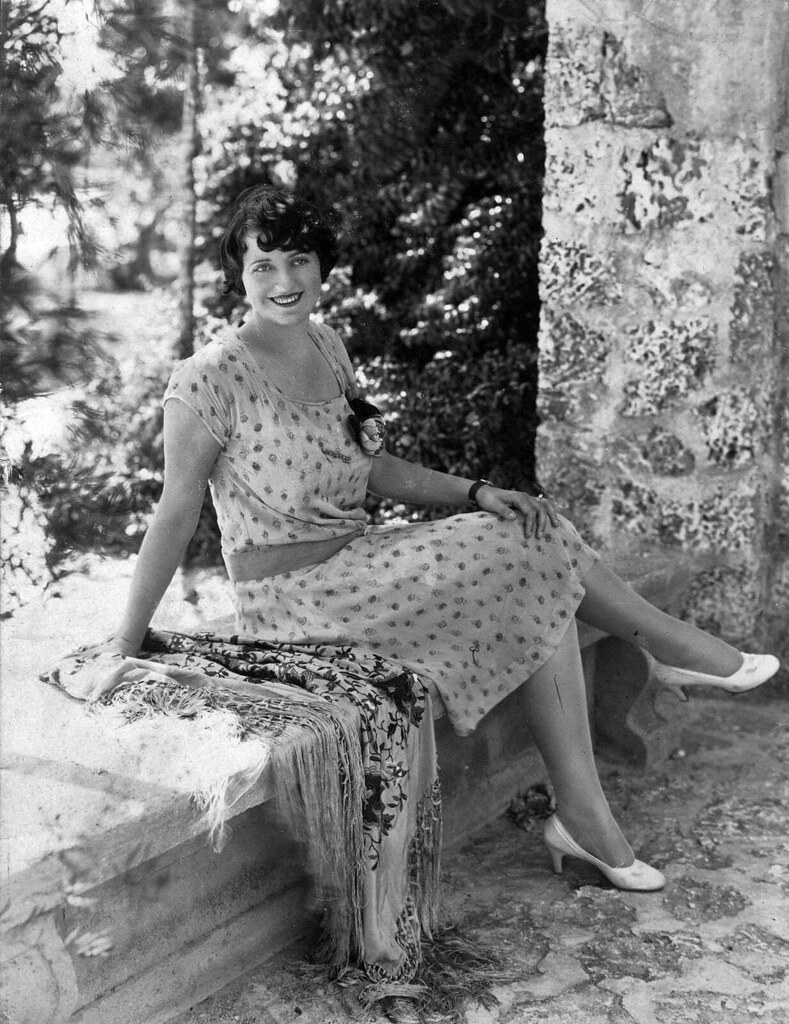
My grandmother "Nanny" as a fashionable young lady in the mid 1920's
Friday, February 29, 2008
He Is Sam
"For National Security Adviser I'd go with my good friend Sam. He knows everything about everything. Really, he does. He's amazing."
The other day I did a short little thing on the Kosovo/Serbia tensions entitled WW V.
Billy wrote a worthy and interesting response, to which I wrote a short response back, and then yesterday my friend Sam wrote this:
To offer a little perspective on this ...
The current Serb-Kosovar mess will not lead to another World War. I'd be surprised if it leads to much of anything, other than another enclave/breakaway province in the perpetually troubled Balkans. WWI hinged on the Balkans because of the bellicose alliances European nations got sucked into as they armed themselves to the teeth; it took only a match to set off a powderkeg. If it hadn't been the Balkans, WWI would've started over some other relatively petty assassination, border dispute, international incident, etc. Everyone wanted that war, until everyone saw how horrifying modern war could get -- and by then, it was too late.
Neither the Cold War nor the War on Terror (whatever that means) is WW3. Not even close. Only the Norman Podhoretzes of this world have the fevered lapses of intellect to imagine that a fairly normal state of global affairs is a "world war."
Can't compare U.S. military operations to other invasions because the purposes were different. The Germans invaded other countries for conquest, as did so many empires of the past. We pursued al Qaeda in Afghanistan because the Taliban was providing them safe cover; our purposes were very specific and limited. As a happy side effect of that, the Taliban's government fell. (Then Bush blew it, big time, by shifting all our military resources to an ill-advised invasion of Iraq, but that's way too much to go into here.)
Germany at the dawn of WWII (or at any other point) was nowhere near being "the closest thing to a superpower the world had ever known." How about the Roman Empire, Greek Empire under Alexander, Mongol empire during the Khan line, Carthage at the height of its powers, among many others -- all controlled far greater land, far greater wealth, far more people relative to the standards of their time. Germany was effectively countered by the Soviets in the east, the Allies in the west, and had a mighty short run. In most cases, the aforementioned empires crumbled from within. That is a better analogy to our own "soft" empire.
Also, the majority of grassroots insurgencies have been utterly demolished. Only the rare ones gain any traction whatsoever. Again, read a good history (Gibbon's is a good one) of the Roman empire. Do you know how many pitched rebellions the Romans crushed during their long reign? The Soviets and their various satellites and allies? Heck, Russia was long the land of the failed revolution before 1905 (the first big failed one).
Point being that you can't compare apples and oranges. I'm no warmonger, and I oppose our occupation of Iraq and want ALL of our troops to return home post-haste, including those at the nearly 700 bases we have worldwide. But I also don't compare even our misguided foreign policy with imperial conquest.
A far greater threat to our nation comes from within, and it is composed of economic decline, increasing balkanization via uncontrolled immigration (sans assimilation) and identity-group politics, and declining cultural standards -- which are, after all, what binds us together in the first place, to the extent it does.
Just my .02 "ameros"! (;-}
As I said above...
Thursday, February 28, 2008
Mercury Rising
These thoughts were stimulated by the article in the News and Record today about the Duke coal burning plant west of Charlotte, as well as an article I read in Wired yesterday about technology and the environment.
NC needs more energy. Duke has got to produce it somehow. Coal is abundant. It is cleaner than ever. Up until recently there had been a lot of attention given to the carbon footprint of this plant. Now the attention is more on the mercury emissions. The opponents seem desperate. But they're on to something actually more serious now.
I think the mercury emissions issue is WAY more important. We have to know the impact of that amount of mercury - where it ends up, how it effects plant and animal life, and ultimately humans. Mercury is nasty stuff.
Coal plants, though cleaner than a generation ago, also generate sulfur dioxide (think acid rain), nitrogen oxide (think smog and ground level ozone), carbon monoxide, various hydrocarbons, various generic small particles, mercury, lead, other heavy metals, and of course carbon dioxide.
I really am not concerned at all about the carbon dioxide because I don't think we have even come close to establishing the degree to which CO2 has any significant effect on global warming, but the rest of those emissions, well, they concern me a lot.
We waste time and money wrangling about CO2 emissions while we send tons and tons of really bad pollutants into the air and water, deforest the last great jungles of the world, destroy one habitat after another, and kill off some of the most wonderful creatures we could even imagine existing.
If I were the devil, and I wanted the earth to become as ugly and horrible and inhospitable as possible, I think I would invent the issue of global warming (and especially the idea of carbon footprint) to divert everyone's attention from the really terrible ways we are already rendering our earth home barren and ugly and a wasteland.
For today, we need to know more about that mercury.
I believe we need a Marshall Plan for alternative and clean energy. We need to incentivize the technical know how of our universities and major industries to solve some of these difficult energy problems together. No, I don't think technology can save the world. But I have come to realize that it is the more affluent countries that become, in time, the cleanest, and that come to care most about the quality of the environment. It only makes sense.
I think we have barely scratched the surface as to car fuel efficiency, solar and wind energy, fuel cells, geothermal, wave and river energy etc.
To me the global warming carbon footprint bug a boo is a distraction. Let's go back to saving our planet from we already know is killing it.
The Heart of Bush
Wednesday, February 27, 2008
A Medical Morality Tale
After mom died, for the sake of my family, I wrote a letter to the doctors laying out the questions we had. I never sent it. They would not have answered them no mater how many wavers I signed agreeing not to sue were they to admit to anything. But here it is, the story of mom's demise in the form of a letter to her doctors:
(I've added a paragraph at the end as a response to Mary Johnson's wise comment)
Dear Doctors,
My name is Joel Gillespie. My mother. Mrs. Maurine Gillespie, was a patient of yours. As you know she passed away on
On behalf of myself and my three siblings, I want to express my gratitude for the care extended to my mom by all of her doctors and nurses during this terrible ordeal. We know that everyone tried very hard to get my mom through her ordeal, and that you are saddened by her death, as we are.
On our side, four adult children have lost a dear mother, and eleven grandchildren a dear grandmother. As we go through the process of grieving our mother’s loss, we find that that grieving process is somewhat hindered by the questions that accumulated along the way. It was often hard to have time to see and talk doctors, and have concerns and questions addressed. Some of these questions just sort of hang there without resolution, and this makes it harder to move on.
As we deal with our own grief and look to a future without our mother and our children’s grandmother, it would be most helpful for us to have as much understanding as possible about the course of events which led to her death. These questions may well point to our own medical ignorance. We simply don’t have adequate grasp of some of the anatomical issues and physiological processes and treatment realities involved. Some of our questions have to do with simply wishing to understand better how one thing led causally to another. Other questions have to do with why certain treatment decisions were made, and whether certain events could have been foreseen. Finally, some questions have to do with whether risks were adequately outlined prior to her surgery.
We would like to would request an audience with the various physicians who attended to our mother during her last weeks of life and have them answer for us as many of these questions as they could. This would be advantageous to our moving forward. We will be in touch regarding setting up such a meeting. Perhaps it would be good to meet with Dr. Orlandini, her primary cardiologist, Dr. Beard who preformed the ablation, and one member of the surgery team who worked with my mom, perhaps Dr. Sutton Jr. who met with my mom before the surgery.
In order that you might have opportunity to remember the details, and in order for such a meeting to be as fruitful as possible, I am going to try my best to articulate the questions as they stand as of this writing. I will try to write these out as straightforwardly as I can, and of course you must forgive any medical naivete which may reveal itself as I go along. I am writing rather clinically and ask you not to read tone or anything into the questions. There is no tone intended at any point.
Our first question has to do with the decision to take my mother off the medications prior to the ablation procedure. We understand that she needed to be symptomatic in order for this procedure to be successful. However, in going off the medications several days before the procedure, my mom was left in a very vulnerable state. He tachycardia intensified to the point that she was admitted to the hospital with a pulse in excess of 200 and a dangerously reduced blood pressure. Her lungs had significant fluid build up. The emergency room doctor noted that she was in failure. She likely had been in this state for some time. In our judgment she should have been more closely monitored during this period of time. Could such an extended period of time with such elevated heart rate so stressed her heart and heart valves that it contributed to her mitral valve failure?
In the ablation procedure the doctor identified two primary “bad” pathways. One of these was close to the “good” sinus node pathway. Our understanding is that in trying to knock out the bad pathway the good pathway was impacted, which ultimately led to the necessity of getting a pacemaker. In other words, he missed. Is it normal to try to take out a bad pathway so near to good pathway?
The process of getting her pacemaker to work properly was quite frustrating for my mom and for us. The pacemaker could not be made to stick. It kept coming unhooked from her heart tissue and then just dangling inside her heart, causing her heart to beat in all kinds of irregular ways. t would help us to understand better what sorts of things can contribute to such difficulty, and whether any of this could have been related to her subsequent mitral valve problem. In particular, could problems such as perhaps improperly coordinated contractions of her atriums and ventricles have contributed to her mitral valve failure?
At one point one of the nurses made comment about something “funky” having gone during the pacemaker procedure. We are curious as to what this might have been.
It seems probable now, after the fact, that the problem with getting the pacemaker leads to “stick” had to do with the friability of her heart muscle tissue, a friability caused undoubtedly by her long term use of prednisone for her late onset asthma. It was, in the end, this tissue friability that killed her, and which we believe should have been predicted. Perhaps the pacemaker problems in addition to the fact of her long term use of prednisone should have caused increased concern about her surgical risk after the mitral valve blew out.
One thing that has concerned us as well is the fact that there was knowledge of a “murmur” of some kind noted in the primary cardiologist’s records both in July and December. My mom had no history of heart murmur or of mitral valve problems. Should not this murmur have been checked out earlier through ultrasound? Could it have been early signs of valve trouble and could this have impacted the decision to proceed with the ablation? Did Dr. Beard know about this murmur?
After the catherization procedure revealed the blockages and confirmed the ultrasound’s finding regarding her mitral valve, it was explained by the surgeon that my mom indicated for valve replacement and bypass surgery. Risks were outlined to her as 8-10%, with the usual risks of stroke and heart attack (etc.) mentioned. Because of her history of asthma and prolonged use of prednisone the issues both of her lung capacity and problems with tissue healing were discussed, which also imposed risk as to her recovery, risks which were also rated at 8%. Her decision to have the surgery was difficult and calculated based on the information she received from the doctors prior to surgery.
After my mother managed to get through the bypass/valve replacement surgery and off the heart lung machine, the surgeon commented that when he got into her heart he found that its anatomy was very unusual, that the walls of the heart were thickened and that there were fatty deposits like little tumors in the heart, and that as a result it had been quite hard to get the tissue valve seated. Because of the time spent attempting to place the tissue valve, and then the additional time spent putting in the mechanical valve, she was then on the heart/lung machine much longer than was good, which had terrible consequences for her eventual recovery, particularly the four days spent on the respirator due to having to wait three days to close up her chest.
Prior to her open heart surgery, my mom had an ultrasound taken in the emergency room (which I refer to below as the “external” ultrasound). This ultrasound showed evidence of valve problems. The catherization procedure undergone the next day also showed evidence of such mitril valve problems in addition to coronary artery blockages. In addition, in the period of time after diagnosis of these problems and the actual surgery, she had on at least one occasion, perhaps two, taken the test whereby she swallowed the ultrasound camera which then enabled the doctors to see the back side of her heart. I refer to this as the internal ultrasound. She may have had another external ultrasound done as well.. Were not the external and internal ultrasounds intended to enable the surgeons to see her heart more clearly, and would not they have enabled them to understand her heart’s “unusual” anatomy. Could they enabled the doctors to make a different call regarding the decision to go with the tissue as opposed to the mechanical valve? Would they have enabled the doctors to mention the possibility of the valve not fitting right is as one of the surgical risks and challenges, which again could have impacted the decision to have the surgery?
During the surgery, when the surgeon came out to inform the family that my mother would most likely not make it through, he spoke of the reason as being primarily the friability of her tissue which caused problems in suturing. he acted as if it would have been a miracle for anyone in her condition, given her tissue friability, to have survived a surgery of this kind, even though he had said her surgery risk factor was 8 %.
Again, our question is whether this issue of friability could have been anticipated given her long history of the use of prednisone? And if so, in laying out risks of surgery should the surgeon have mentioned to my mom and to us the possible problem of tissue friability? It never came up prior to the surgery and in discussion of risks. This is the single biggest concern we have.
Although her life would have been more limited and less active had she not had the surgery, and though in time her coronary artery likely would have closed off and she would have died of a heart attack, my mom’s week in the hospital prior to surgery proved that she could live with the valve reflux if properly monitored and if given appropriate medications. Had the surgeon mentioned the risk of suturing given a likelihood of tissue friability due to use of prednisone the decision to proceed with the surgery could have likely have been very different.
The evening before my mom died the nurses had put her on the c-pap machine to help her breathe. According to what the nurses later told us they had to take my mom right off the c-pap because her blood pressure dropped quickly. We do not understand what the relationship is between her being on the c-pap and her blood pressure dropping. How does the c-pap cause one’s blood pressure to drop? Does being on the c-pap impact or stress the heart in some way?
When we last say my mom at
After my mom died the doctor explained to us that her heart had just stopped. But it had been explained to us already by the nurse that her blood pressure had dropped, setting off the alarms, but her heart continued to beat and that she had continued to breathe, and that attempts were made to reverse or correct her blood pressure drop, and that only subsequently did her heart actually stop.
It seems to us that some event caused her blood pressure to drop as it did. Either something caused her heart to stop beating effectively (a bypass graft coming undone, the valve misfunctioning, her coronary arteries getting blocked, etc.) or something caused her to lose blood internally, such as a hemorrhage.
As far as you can know what caused her heart to stop beating effectively, and is there an identifiable cause of that, such as being put on the c-pap machine?
(Added after Mary Johnson's wise comment...If my memory serves me correctly we decided within a very short time not to pursue any sort of lawsuit. Yes, mistakes were made, but my mother also made enough mistakes in her own self care for us to blame her demise on anyone else. I think I learned three things. First, doctors, particularly surgeons, tend to be overly optimistic about what they can pull off. That can lead to unwise care decisions. Second, once you're in the hospital it is almost impossible to have a good substantial talk with a doctor (this has been verified for me as a pastor a hundreds over as I have sat with anxious families). Third, after anything goes awry, doctors are so scared of lawsuits they do not want to talk. It would allow wonderful closure for a family if a doctor could say "I'm sorry, my hand slipped and I nicked the artery" or whatever. But they can't admit to anything because of malpractice suits breathing down their necks all the time. This helps nobody. I carry no grudge about the medical care, and cherish the memory of my mother. Nor do I really await any answers. I stumbled across this and thought, well, I wrote it, I may as well publish it somewhere . Maybe someone will benefit from it. I don't know, maybe not.)
Mom - We Miss You
Maurine (Sanders) Gillespie
b. March 27, 1932, Sherman TX
d. February 27, 2001, Columbia, SC
m. Curtis Claunch Gillespie, Jr. 1952, Sherman Tx
Mother of Michael Curtis, John Robert, Joel Sanders, and Mary Adeline
Grandmother of Rachel, Shannon, Stephen, Heather, Rebekah, Michele, Laurel, Mary, Anna, Sanders, Madeline, and Joshua
It would be a high honor on this the anniversary of her death if you would remember her with me and peruse pictures of here here.
Monday, February 25, 2008
The Things You Do For Love
Oh, and for real, last month I drove to Columbia SC to attend a certain public ceremony. In order to please my guests, I had to wear a tight heavily starched shirt, wrap this crazy thin garment around my neck and tie it into a double knot, put on a black wool suit, wear heavy black shoes, and stand there looking all serious and earnest. So, does that make me a mobster, a gangster, or worse maybe, a stock broker? Just kidding! and no, it was a wedding not a funeral.
Flower Power
The Religiously Irreligious
The Real Axis of Evil
This is all very good. I like it. But...
We got into No Child Left Behind in the first place because our public school system, broadly speaking, sucked. It was failing our kids. The fact is, it is an embarrassment. We should all be ashamed.
I am a strong believer in public education. I am a strong supporter of public school teachers. I was a public school teacher for five years. But our system of public instruction is broken beyond the ability of its traditional overseers being able to fix it. I think it is beyond reform.
There is an Stalin-esque alliance, an axis of evil, an unholy trinity that holds our public school system in a death grip. This alliance is made up of the state departments of pubic instruction, the university departments of education, and the various teacher's unions or associations.
There are good and well meaning people in each of these groups who care about our children, but the system as a system is guaranteed to look after its own interests and not that of our children or our families (or our teachers).
Throw in the federal government as in "No Child Left Behind," with it's earmarks and scoring systems, plus ladder climbing superintendents whose upward mobility depends on good scores and it all just gets worse.
Until this triumvirate is broken I see no hope for real or lasting or effective change. It will just be window dressing, moving the furniture around, sloganeering.
What OUGHT and what NEEDS to happen is that responsibility for education needs to pushed down as much as possible to the local level, even as we keep per pupil funding as even as we can. Education is simply one of those things in life that works best locally. It is, oddly, one of those things where, until local communities have to step up, they won't, and when they have to, or until they are no longer made irrelevant, they will step up.
We have to change the certification rules for teachers. Teacher certification classes mean little compared to a lot of other things that make for good teachers, like decent IQ's, knowledge of material, general knowledge, work ethic, love of students, etc. All those extra education-course requirements, along with the woefully low pay, just keep good teachers out of teaching. Students majoring in education typically have the lowest SAT scores of all the students on a college campus. Great, huh?
Smart teachers unshackled by teaching to the test (and freed from having to take a million teachers' classes at night just to be able to make a little more money) will have the time, energy, and creative freedom to plan great classes. When I taught high school physics, chemistry, and physical science I was given a course title, a lab closet filled with thirty year old junk, a chem lab with enough HCL, H2SO4, HNO3 and other stuff to eat a hole to the center of the earth, and enough sticks of Sodium to blow the water out of lake Murray. I had to pick text books, plan scope-and-sequence, order lab material, write my own tests (for which I gave partial credit on most questions since it was so much math based - so, no machine scoring for me), clean up those closets, you name it. Hard work, huge amounts of time, most nights up late preparing or grading (I think I made $13,000 my first year - oh, but I had all summer to holiday in Spain, right John?), but we had some fun and compelling classes.
We need to break up the school districts. I am not convinced these consolidated monster districts actually save us money but even if they do it's not worth it. It makes the system seem like the Queen Mary navigating the Haw River. It's just too big, too slow, too cumbersome, too "one size fits all." Break it up. Smash it. Give more leeway to the local principles. Give more freedom to the local teachers.
All the new construction in the world won't make up for poor teachers. Give me good teachers in ratty buildings over mediocre teachers in new buildings any day. With good teachers magic happens.
And Republicans, just be quiet already about merit pay. It doesn't work. There are no objective criteria that won't end up meaning more conferences, more classes, more time "in the system" under the sway of the unholy trinity. The only way to discern real merit is subjectively, and that will never fly, unless we follow a military model and promote those we know by observation worthy of promotion. I don't think that will work.
As I have said before, it is one of the hardest things in the world to be a good teacher. If you have not done it I don't think you have any idea how demanding it is. It's a 15 hour a day job. It's exhausting. And it's rewarding. But it pretty much becomes your life. I'm afraid it's also way too easy to be a bad teacher. If we raise academic entry requirements (as in, you know, med school) and raise pay substantially, teacher quality will take care of itself, and we'll just have to let the bad teachers retire out of the system.
I realize that my ideas won't in reality be passed either. But Obama is dreaming if he thinks that just casting off NCLB is going to bring in some golden era of education. It will just bring us back to the same mediocre place we were in before. That's a place I don't want to be. American public education will still suck.
Oh, and one more thing...speaking of special interests...we tend to think of such interests as corporate, Madison avenue, greedy old men in suits...but the aforementioned educational triumvirate is a triple play of special interests and lobbying. Just cross them, you'll see.
Old and Wrinkled
Falling Slowly - My Favorite Oscar Moment
Anna, her sister Heather, and I had rented "Once" over Christmas holidays and fell in love with the music. One of the songs had even become Anna's cell phone ring tone.
When later they actually won the Oscar for best original song in a movie I called out for Anna again. Glen Hansard's acceptance speech was humble and delightful and fantastic, as were Marketa Irglova's words after they brought her back up (having whisked her off the stage a little too quickly first time around).
As I said in my rambling re-entry back into blogging this January, "Once" is a beautiful little Irish film. OK, yes, it is filled with typical Irish street language, so it's not for the kids. It has Indy film all over it, from the simple camera angles, to the linear story line, to the utter lack of special effects. In his acceptance speech Hansard said the movie's cost was only $100,000!.
It is a slow film, slow-like-life slow. It is about music, and about how circumstances brought two people together to make music for a week - a once in a lifetime opportunity. It's about wisdom, knowing how to know the difference between a fleeting relationship opportunity and the more substantive and real relationships that need mending. It's a really sweet film. Beware, if you watch the movie you WILL buy the soundtrack!
And how real life has imitated art. Now Glen Hansard and Marketa Irglova are touring together, when they can. Their voices really work together. They even toured with Bob Dylan this summer, and if you think that is like being relegated to the old folks tour, word is Bob Dylan has never been better, and lit up the stage this summer like never before.
So, listening to "Falling Slowly" was my favorite Oscar moment.
You can watch and listen to the movie clip from Once where their characters are putting together "Falling Slowly" together for the first time while in a music store here. here.
You can watch them on Letterman here.
My favorite song from the movie is Marketa Irglova's "If You Want Me."
Correction: My favorite song is The Hill. I like "If You Want Me" too.
To B or not to B, That is the Question
The first reason is that I don't go to the tournament anyway. It's just too expensive, and I'd rather watch golf on TV.
Secondly, I think the GGO (in its various iterations) has been good for Greensboro over the years.
Thirdly, the GGO is much older than the current leadership of Greensboro.
Fourthly, and most importantly for me, I don't do boycotts unless there are extreme, unambiguous, and reprehensible, moral and/or human life issues at stake.
I've come to this position or approach through the ad-infinitum calls for boycotts from conservative Christian and liberal environmental groups over the years. The thing is, once I really start to get nit picky about it, it is hard to find any product that is not tainted by some policy or behavior I find objectionable. It's like the Kevin Bacon thing, except that for most of us our purchasing decisions place us less than six degrees from evil of some kind. I do believe I would have to remove myself from the world altogether not to need a good moral shower everyday.
But it is into a fallen broken sinful often wicked world I have been cast. Rider on a storm I am. If there is a clear unambiguous way I can keep money out of the hands of wicked men and women who would corrupt and despoil and kill, well, I would, and I suppose that by not buying porn, drugs, AK 47's, men's club memberships, and the like, well, I do what I can. But generally boycotting (with a mind and a conscience) just sucks me deeper and deeper into a dark abyss.
I am reminded of Isaiah's words:
"Woe is me! For I am lost; for I am a man of unclean lips, and I dwell in the midst of a people of unclean lips"
Obama Been Laudin' (Himself)
I watched the Obama speech from Houston the evening of the Wisconsin primary. I will admit to having a goose bump or two, and then that awful sick feeling of "oh no, something is going to happen to him." Probably just paranoia, but then I read about the lax security. Was THAT an accident?
Obama definitely has the "it" factor.
As the speech wore on and on and became more and more self referential, I became bored. "Some people say about Obama..." Seems like he likes the sound of his own name too much.
I loved a lot of what I heard. It all sounded so wonderful, fabulous, beautiful, dreamy.....impossible.
As much as I don't like Hillary Clinton, and as much as I think her candidacy would be good for the Republicans, I think her basic point, as poorly as she is making it, is sound. Obama is in la la land. He can use all the wonderful rhetoric he wants, but will that cause all the warring parties in Washington to fall at his feet, cast down their crowns, and give up their principled, cherished, and/or well funded agendas? I don't think so.
David Brooks I think hit the nail on the head in this morning's News and Record editorial piece, which can also be found on the NY Times.
Tuesday, February 19, 2008
Monday, February 18, 2008
Summers Past - Down By the River
For more pictures of adventures past look here.
Saturday, February 16, 2008
Charles Barkley Is Stupid (Can I Say That)
Having, said that, what Charles Barkley said is just stupid.
Based on the fact that many conservatives, and many Christians, whom he simply lumps together, are opposed to abortion and gay marriage, he says that they are fake Christians, because, as we all know, Jesus says we aren't to judge. Barkley goes on to say that he is for abortion and for gay marriage.
Since he said that "we are not to judge," and also says he is for gay marriage, does he think that gay marriage is wrong, but it's not his place to judge it. I'm confused.
But to the the main point. In fact, Christians (or non Christians - there are many atheists who oppose abortion) don't oppose abortion because they are being judgmental in any negative sense. They oppose abortion because they believe that children in the womb are human beings and that it is not our place to kill them. Being pro-life is not a matter of being "judgmental" at all. Well, except that we judge the lives of the unborn to be precious and significant.
Christians (or non Christians) who oppose gay marriage aren't being judgmental either regarding the public policy matter of gay marriage. According to Barkley's logic I think it would be "judgmental," and therefore wrong, to oppose any sort of marriage arrangement between consenting adults. I wonder, are there any marital arrangements that he would, in judgment, oppose? I suspect that there are.
Again, the issue of marriage per se, legally, is something that comes under the jurisdiction of the civil authority. We're talking public policy here, not private attitudes towards our neighbors.
There is truth to the notion that Christians are not to judge those outside of the faith. The Apostle Paul makes this very clear in 1 Corinthians 5. Specifically he is talking about Christians who are "not associating" with people outside the faith who are "sexually immoral people...or the greedy and swindlers, or idolaters, since then you would need to go out of the world." There are many Christians who really need to take those words to heart (I just made a judgment - oh my!).
There is an appropriate judgment that is to take place inside the faith. Paul made one about Christians failing to associate with non Christians for the reasons cited above.
Yes, we as Christians are all "in progress" but we're all in progress towards a serious goal of holiness and Christlikeness and honesty and purity and love and goodness. We are called over and over, not just to forgive, but to exhort, to encourage, to admonish if necessary, so that we won't be deceived and dragged down by the enemy of our souls, whom we believe to be real. We are to bear one another's burdens when we fall, and when we fail, and we are to be careful not to be haughty, and to realize that we are each and every one weak and prone to fall. . It's a serious business being a Christian, and no walk in the park.
But of course we together in community as Christians have to exercise judgments of all kinds. In fact, Barkley himself brings out one of the judgments we are to make. For example, I think we are to make a judgment as to whether people are being unduly judgmental. How can we call a person on being judgmental without making a judgment about his being judgmental? But mere "making judgments" is not the point of Jesus' words about judgment anyway. He makes clear what he means. He does not want us as Christians to be going around looking for the faults in others while not considering our own faults. We are to have a much greater concern about our own sin than the sin of others. We are not to be proud or holier-than-thou or look down upon others.
We cannot be asked to forgive if there is not something to forgive, if there is not an offense. But again, Jesus there is talking more about sins committed by one person against another. I think he said something about forgiving 7 times 7 times, or was it 70 times 7? I forget.
But none of this has anything to do with public policy. It IS the role of the civil authority to judge, to bring justice, to establish laws and to enforce them. In a representative democracy, we the people (for better or for worse) are part of that process of making laws and enforcing them. We vote. We speak freely. We even make judgments about public officials. Well, at least bloggers do that, and news people, and talk show hosts, and Hollywood personalities.
In effect, we as Christians wear two hats, the private Christian person hat, and the public policy participant hat. Sometimes the hats get confused. Barkley and others need to understand this. How we view the issue of abortion is not the same as how we think or feel or act personally toward those who are pregnant and in need. How we view the issue of gay marriage is not the same thing as how we treat, act toward, and deal with our gay neighbors.
I think Barkley was being terribly judgmental in what he said. I am SO deeply offended.
Maybe I shouldn't say "Charles Barkley is stupid." I'll try to remember to change that title sometime. Sounds kind of judgmental.
And may God help the good people of Alabama.
Looks Like Flowers Not Snow
Check out my Flickr photo stream, including lots of recent photos of downtown Greensboro, here.