Pages

Showing posts with label Nature. Show all posts

Thursday, October 29, 2009

The Dearest Freshness - Deep Down Things


The Peninsula Trail in Greensboro is part of the Greensboro watershed trail system, and the Mountains to Sea Trail. It is perhaps the humblest of our watershed trails, exploring a a small peninsula of land surrounded by Lake Townsend east of Church Street and between the two Church Street bridges. I took a short walk their last Sunday. I wasn't feeling terribly inspired or artsy or at one with nature, the weather was so so, and light conditions were not great for photography, but I took a few shots anyway.

My point: even on the most humble little trail and on a very average day, treasures and joys abound when we slow down take notice - from tiny goings on down on the ground to large trees to all sorts of shades and textures and colors. No matter how badly we have messed things up, the glory of nature and nature's God is always there waiting for us. As Hopkins says, "And for all this, nature is never spent, There lives the dearest freshness deep down things;..." No matter how badly we have messed things up...

I think the same principle holds to life in general. Glory is often most deeply revealed in weakness...

More Penninsula Trail Pics HERE

Tuesday, July 14, 2009

Guilford Trees

My office at present is on the 5th floor of the Guilford Building on South Elm in Greensboro. I love it downtown. I look to the north out of my window and see downtown proper and beyond. Though I can’t make out individual trees in the distance, there is a lot of green out there.

A while back I had an office in a building near the corner of Westridge Road and Battleground Avenue. There was a parking area that backed up to a gas station, to one neighbor’s back yard, and to a side road called Nathaniel Street. There was a small buffer of a few feet between the parking lot and each of these different bordering pieces of land.

One day while sitting in the parking lot I wrote the following. I call it “Guilford Trees.” I was speaking at first of the small little spaces of trees surrounding the parking lot.

In these rather small spaces a variety of typical local trees are reaching and stretching for sunlight. There is a young sycamore maybe 8 inches in diameter, the trunk completely white, that has bent and wound its way to its spot in the sun. From it hangs many of last fall’s sycamore balls. There are a couple of sweet gum trees, each with its component of unfallen sweet gum balls dangling as they do. There are several young tulip poplars growing tall and straight trying to outrace as it were all others to the open sun. There is a loblolly pine tree (most common tree of my hometown), several Virginia pines, a few maples, a red oak, a dogwood, a white oak, a black locust, and a small hickory tree.

300 years ago before settlement by European colonists, many of these same kinds of trees would have made up the mature forests of the rolling hills and stream bottoms of what is now Guilford County.

It is highly likely that over the course of time well over 95% of the land in Guilford County has at some point been cleared for crops. What has not been cleared for crops has been logged for wood. There are no known stands of “virgin” or even mature climax forest in Guilford County.

In fact, most of the land has been cleared several times over again. The remaining forested parts of our county, even in the creek and river bottom lands, contain second third or even fourth growth forest.

The early settlers who came down from Pennsylvania and Virginia came to an area almost absent of a local Indian population. The Saura Indians based in the present Eden area to our north and Randolph County area to our south had at one time roamed and hunted and even farmed freely in what is now Guilford County. Because of pressure from marauding Iroquois tribes the Saura had fled from the area before it was setled. Yet, they had left their mark. The first settlers were surprised at the number of open fields filled with tall grasses that would reach up to the height of a man’s chest riding on a horse.

But mostly the land was continuous forest. Early settlers cleared the forests for crops lands, usually using poor farming techniques, and either cleared more land or moved on when the soil was depleted or eroded away. Fields would convert back to forest, which future farmers and settlers would clear and log again.

Not only were the forests cleared for growing crops, but the trees were needed for fuel for fireplace and furnace, as well as for building supplies – for wheels and casks and barrels and furniture. Many trees were cut and exported for use by the military or by industries growing up around the country.

Most of the forests we have today are in the midst of various stages of the process of plant succession. Thus on a hike around Lake Brandt one might come across (even in a thickly wooded area), a large oak tree with old branches spreading out horizontally, a sure sign of a tree having grown up in an open space with no competition from neighboring trees, and with no need to waste resources in a race to the top of the canopy. Likewise, amidst stands of mixed hardwood and pine woods one will come across a row of old red cedars, marking no doubt an old fence line dividing field from field.

Had we been able to walk into what is now Guilford County 250 years ago we would have found largely mature hardwood forests, though even some of those forests would have grown up from fields cleared by Indians long before. These mature piedmont forests would have been characterized by a dense high canopy made up primarily of white oak, chestnut, hickory, southern red oak, and tulip poplar, the lower part of the canopy itself perhaps a hundred feet high. At ground level the field of view would have been dominated by large tree trunks spaced much farther apart than we are accustomed in our woods today. Tree trunks would have exceeded two feet in diameter for the great white oaks, and up to four or five feet in diameter for tulip poplars. The forest floor would have been relatively clear of brush, with somewhat of a park-like feel. Under this think canopy would have been scattered dogwood, sourwood, ironwood, redbud, beech, and other smaller trees.

Creek bottoms would have been dominated by huge sycamore trees up to six or more feet in diameter, along with massive tulip poplars, with great beeches and maples on the bluffs.

Through these forests ran many well worn paths, some used by Indians, and many packed and cleared of undergrowth by traveling herds of buffalo. It is hard to believe that in our little section of North Carolina, as recently as 250 years ago, there would have been an abundance of buffalo, wolves, elk, and eastern mountain lions, in addition to the common animals we still see today. It was a wild and often dangerous place!

Clearing this land was not for sissies, but cleared it was, in time almost every single bit of it.

Today we have the privilege of watching many forests coming to regain some of their earlier splendor. With agriculture waning in economic significance, there is the likelihood that if we can set aside enough of the tracks of land that are left, maybe our children and children’s children will have even more opportunity than we had of knowing what it would have been like to wander a piedmont forest of long ago.
Friday, June 19, 2009

The Birds

Wednesday evening I came home late from the office - it must have been about 8:00. I parked the van on the road near the driveway (on the cul de sac). As I got out of the car some birds caught my eye, and I stopped to look. Apparently it had just rained, and the water from the pavement on the cul de sac was evaporating. I stood in the middle of the road.

Then they came - the birds that is, first a couple and then more and more. I think they may have been swifts or swallows. They would fly in very fast, then do an arc like an ice skater and be off, circling again a couple of times around trees or just in the air. Their wing beats were incredibly fast. Several flew straight away from me and their wings were just a blur surrounding their body. They would dive into the "asphalt zone" on a steep glide, turn on a dime, zig-zag, and be off again on a circle around a near by tree or just up in the air.

Watching them in front of me, above me, behind me I kept thinking of how an anti-aircraft gunner might feel with planes coming from all directions. On several occasions one or another of them would fly within feet of my head and I could hear the wings and the high pitched twittering. They acted as if I were not even there.

I assume that there were insects rising up perhaps with the humid evaporation off the asphalt, but I could not see anything. The birds zig-zaggy change of direction as they entered the "asphalt zone" suggested feeding, but I could not tell for sure.

There is something joyful and humbling about being in the presence of another creature's life and activity, especially when we are completely irrelevant to that creature. There is a sense of transcendence when we are brought out of ourselves into self forgetfulness and wonder at that which is truly "other." Our overly self conscious selves need this - but it has to come to us, as if by accident, and we have to be prepared to be caught up in it.

The birds kept on whipping in and out and around. I stood in the midst of them for maybe 10 minutes and eventually went into the house. It was the highlight of my week.

Tuesday, March 24, 2009

The Life Is in the Bud

Greetings to all in Greensboro on a cool March day, 2009. I hope your day is going well so far.

The other day I walked by
The Perfect Tree (a Post Oak) on Elm Street I saw that its end-buds (buds tend to be clumped at the end of oak twigs) were starting to swell, soon to open and fill the air with oak pollen. Last evening I noticed that the birch tree catkins (from the white or paper birch trees by our patio) are just starting to swell and elongate. Soon, birch pollen will cover our patio. I pity my neighbors with allergies, but I love, in the truest sense of deep and abiding affection (and praise to God), the “miracle” of Spring. OK, so I am a biology geek, but tree buds are way cool. Their formation, dormancy, and opening is akin to conception, development, and birth in animals, and almost as fascinating.

Spring is here! Take a break. Go outside and walk around and look at the perfectly ordinary and common tree buds all around you. They are swelling. Many have opened already and we see leaves on their trees – maple trees for example. Others are just getting ready to open, such as dogwoods. Notice the covering of the buds. All winter long those bud scales, sometimes one big scale, sometimes two, sometimes more, have protected the life inside the bud from the cold and wetness outside. One freezing rain storm after another may coat the tree with ice, but the bud scales keep the life inside the bud safe and ready to grow when the time is right.

Inside are tiny leaves and/or flowers, either well-formed in miniature, or at least already differentiated as cells ready to take on full form. What energy the tree didn’t put into its seeds or store in its roots last summer and fall, it has packed into these buds. Indeed, as last summer wound down, and the buds
which would lie dormant over the winter started to form, the tree “knew” to transfer important energy sources from the leaves and roots to the buds.

These buds are rich in energy which is why deer and other animals like to eat them. As the buds open they will attract the season’s very earliest insects, crawling and flying, to their moisture and sugars. Over the next few weeks Greensboro will be filled with budding coming-to-life trees, awash with flowers. Tree flowers aren’t all as bright and glorious like red buds and cherries. But each is beautiful and fascinating in its own way, if you have eyes to see. And the overall effect of abundant small flowers and young leaves can be quite beautiful as well. I think in particular of the beautiful earth tones of oak tree catkins and early leaves. This lends a feel of autumn to stands of budding/leaving/blooming oaks. Sometimes the most beautiful things are faint, and less showy. So keep your eyes peeled, and if you have a chance, go bud watching. It’s at least as fun as sitting at a computer all day!

Tuesday, February 03, 2009

February - Buds, Birds, and Blooms

It's cold outside this morning. During the night it snowed a bit and the roads are too slick for the school buses, so school was canceled. I am at home with my daughter.

February is certainly an unpredictable month. There may be a week of 70 degree weather, or there may be a huge ice storm. The most amazing winter weather event of my entire life occurred in February - February 9-10, 1973 in Columbia SC. But that's another story.

Just like in late August and early September when there are often harbingers of fall - the cold front that brings air that is dry and cooler and seems to smell like fall, the Tulip Poplar leaves here or there that are starting to turn yellow, or the flock of birds that shows up in your yard already starting on its journey south.

February is similar - it is still winter but hints of Spring abound. It is a month pregnant with possibility. Despite the cold of January that has just past, the days continue to lengthen, and temperatures become just a little more mild.

Life begins to break out all over. There are three harbingers of Spring that make February delightful - buds, birds, and blooms.

The birds are busy and even have a different sound. They are claiming territory and building nests and mating. I've seen several blue birds this week flitting busily about. We have sparrows building a nest in a shrub. Crows are hyper. This can be a hard time for birds that gather seed and berries, as well as those who feed on insects. Food sources are in short supply. It's a good time to "feed the birds, tuppence a bag."

Tree buds are swelling already. It is fascinating to study and understand what it is exactly that triggers bud swelling and opening. Day length or night length may play a part, as may temperature. Either way, buds are really cool, containing in them tiny but recognizable precursors to leaves and flowers. It's only February 3rd today but already the silver maple buds have expanded.

February brings forth many beautiful and delicate little wildflowers in fields and lawns. Many consider these to be weeds. My favorite early wildflower is Lamium, that little purple flower that shoots up with a tuft of beautiful blue/purple flowers in a whorl around the stem. There are many others, mostly small. I hope to get pictures of them all this year.

Take a walk, take a break, and open you eyes and ears to all that is around you. Spring's a coming!

Monday, December 01, 2008

Look to the SE - Crescent Moon, Venus, and Jupiter

Dear Friend,

If you want to be awed at the beauty of this great solar system we're a part of - then go outside - right now. Whatever you’re doing is probably not as important at seeing this. Look to the SW sky – fairly low - see the crescent moon, only about 15% illuminated, with Venus and Jupiter just to the right. Really, you’ll be glad you saw this. It’s awesome!


Thanks to Betsy Clark for the Twitter tip!

It's 6:36 as I write.

Monday, February 25, 2008

Old and Wrinkled

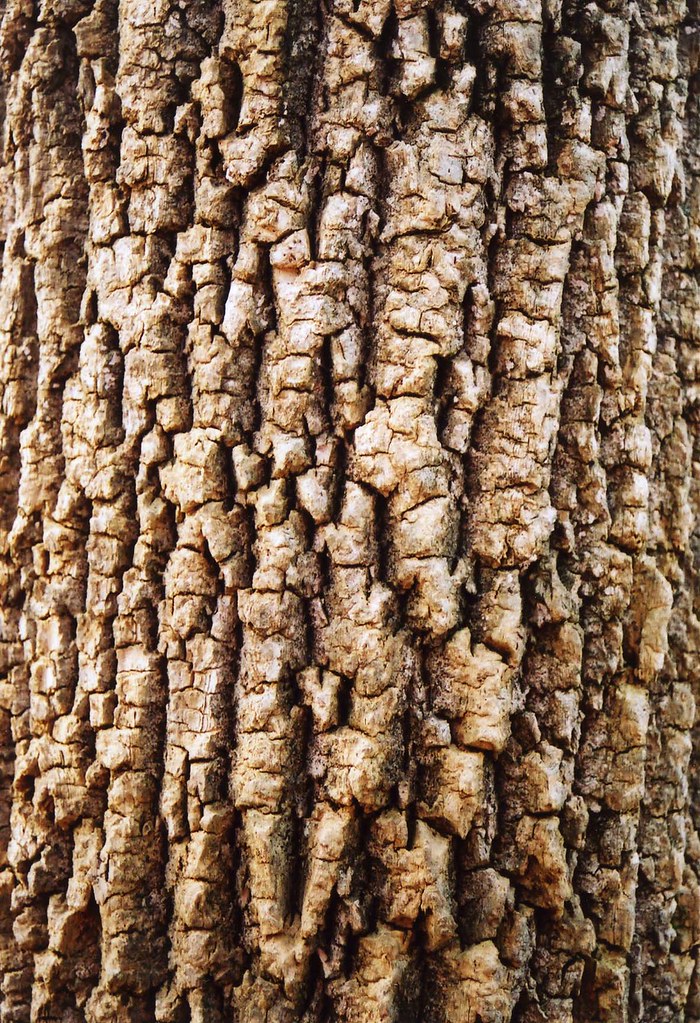
I know this isn't an inspiring photograph. It's the bark of a very old Tulip Poplar tree on the Beech Bluff Trail off a finger of Lake Higgins that eventually crosses Fleming Road. There are also some very old Beech trees along that trail - hence the name. I like to wonder, "What has this tree seen in its day." I wish there were really Tree Beards in our world that could talk to us. Though Tulip Poplars do grow quickly, given the height and girth of this one, and the deeply fissured bark, I would not be surprised if it were a hundred years old, saved from the saw by the boggy creek bed and steep hillside. Its beautiful back in there - lots of birds - you should check it out.

Friday, February 15, 2008

Walkin' Before Midnight

"I went out walking, before midnight, out in the moonlight just like I used to do"

That was last evening. There was a very bright half moon. Contrails, lit up by the moonlight, streaked from SW to NE. One of them went right through Orion's belt. Looked like a long sword. Very cool.

Late in the afternoon the day before, Wednesday, I went on a walk,ending right at dusk. I wrote about it that night, to post Thursday, but what I wrote didn't seem to fit with the snow!

More signs of season's change. The alder catkins were longer, and more of them were open, or blooming. I didn't have my camera with me, but if you want to see a picture look here. I saw several Silver Maples in bloom. I doubt the snow and cold killed those blooms but we'll see. Tree buds are swelling. Even the dogwood buds seem larger.

Tea Olives are in bloom. The aroma of Tea Olive is my favorite aroma in the world. I don;t know if it's the soil, the weather, or a different variety of tea olive, but the aroma does not quite seem as strong here as in Columbia, but get close enough and it's there. Ahhh.

A large honeysuckle bush was in full bloom and quite aromatic.

Birds were twittering all around in that way they twitter in the Spring when they are busy nest building and mating and such. It's a different twitter than in the summer or fall. Remember, this is an especially good time to feed the birds, since last year's natural supply of berries and seeds is diminishing, and the bugs and new seeds haven't really come out yet.

A huge flock of Robins covered a yard and trees at Regents Park and Beaconwood. Robins usually aren't as energetic as this crowd. These guys were down right rowdy. I made double sure they were Robins and not Thrushes. I have no idea whether they were coming or going, but it felt like a red breasted version of "The Birds" for a few minutes there.

I love the stand of pines as Bass Chapel crosses over lake Jeanette near the club. Most of them are Short Leaf, with a few Loblollies scattered here and there. Makes me feel like home.

More and more small flowers are blooming, especially on the south facing slopes. These small early spring wildflowers are my favorite.

All for now.

Sunday, February 10, 2008

Hovering Heron!

I have always believed that life's richest blessing come to us in unexpected moments. I had three of those moments Sunday. Here's one:

I went out for a walk. On pretty days I prefer to workout outside. Sometimes I run, sometimes I walk, other times I walk/run. I have a four mile route, a five, and a seven.

I took off at about 5;15 for the four mile walk up to the "circle" at Lake Jeanette and Elm Street Extension and back home.

Last evening it was very windy as you know - and a bit nippy. I was on the footbridge across Lake Jeanette, the one further out from town. Now, to set the stage I was walking a I suppose south southeast. The sun was setting south-of-west to my right. The wind was from my right as well, out of the west, or west southwest. I was about 2/3s across the bridge when a great blue heron crossed over the footbridge maybe 30 feet ahead or me and 20 feet high, flying roughly eastward with the wind at his back. I stopped to watch him. I was surprised as he made a long leisurely loop across the larger open water to my left. Gradually he completed his 180 degree turn until he was flying west, right toward me, toward the sun, and against the wind. When he got to where I was standing on the boardwalk, maybe 20 feet above me, his forward motion stopped. He was flapping his very big wings but only just enough to stay stationary relative to me. He just "hovered" there for about thirty seconds, or so it seemed. It was like I was watching "Bird in Flight" at an IMAX movie. His head turned slowly to the right and to the left scanning the water ahead. He completely ignored me. Then he stopped flapping, tucked his wings a little, and glided in a slow downward angle against the wind and off to my right, disappearing beyond the road bridge.

I am guessing that with the sun descending in the west that there was some way in which the light from the descending sun (which he was now facing) gave him an ability to see fish in the water without them seeing him, and he was hovering for that reason - to look for fish. He seemed pretty "purposeful," and I am thinking that this might be a familiar strategy - he gets a fish, he takes off, does another long loop, hovers, and gets another fish, etc. But I don't really know.

It was pure childlike happiness for me. It brought tears to my eyes. I consider it such a privilege whenever I get such a view of such a creature. This heron was beautiful. His legs seems perfectly relaxed. His wing span must have been four to four and a half feet.

Nothing in this world gives me more joy than such unpredicted sightings. I feel so at home outside. The trees, the clouds, the wind, the birds, the wildflowers, the spiders and bugs - these are my friends.

And the animal creatures - the animals are so "other" - there is such a profound mystery in their existence. Of course I believe that we were all made by the same creative mind.

Amidst such turmoil and ugliness of life, good and beauty shines forth still.

Monday, February 04, 2008

I Love February and March

I went on a long walk today. I love this time of year, so pregnant with possibility. It's a busy time outside. Despite the cold of January past, as days continue to lengthen, and as temperatures become a little more mild, life seems to start to break out all over. Have you noticed the tufts of wild onions are popping up in people's lawns. I saw a few dandelions in bloom today, as well as favorite common Spring wildflower Lamium, that purple flower that shoots up with a tuft of beautiful blue/purple flowers in a whorl around the stem.

I saw a blue bird pair building a nest while on my walk, and a bunch of crows squawking and chasing a hawk. Tree buds seem slightly swollen. Buds are fascinating.

This can be a hard time for birds that gather seed and berries, as well as those who feed on insects. Food sources are in short supply. It's a good time to "feed the birds, tuppence a bag."

Take a walk, take a break, and open you eyes and ears to all that is around you.

Monday, September 17, 2007

Guilford Pine Trees

There seem to be four major pine species in Guilford County, with several minor species popping up here and there. It’s fun to learn and notice the differences.

But what is it that makes a tree a pine tree?

First of all, pines are evergreens, that is, they keep their leaves all year round. Actually the leaves are not really permanent, but they are not shed all at once at the coming of winter as with our deciduous trees.

Second, pines have long narrow leaves we commonly call needles rather then leaves. Most pines have needles that come in bunches of two to five, the bunch being connected and held together at the stem end of the needle by a sheath.

Third, pines all have cones. These are the woody (as opposed to pulpy) seed bearing fruits commonly called “pine cones.” The cones we think of as “pine cones” are the female or seed-bearing part of the pine reproductive system.

Pine trees are “gymnosperms,” that is, they produce “naked” seeds, or seeds without ovaries, seeds without surrounding fruits. Pine tree seeds are protected within the woody cone which is itself often covered with sharp scales to discourage animals from eating the seeds, though it is not unusual to see a cone stripped of scales and seeds by a hungry squirrel.

These uncovered seeds of Pine trees, when released from an open woody cone, generally circle to the ground like maple keys. Kids commonly call these pine seeds “helicopters.” When I was a kid we used to punt footballs straight up into the pine trees to knock loose the helicopters, which we then run all around and try to see how many we could catch before they hit the ground.

The very small male cones or catkins at the top of the pine tree produce the wind borne pollen that is released in the late spring covering and fertilizing the temporarily opened female cones below, as well as covering cars and parking lots and lakes and anything else nearby.

Fourth, pine trees tend to grow tall with straight trunks and limbs mostly higher in the tree in older trees. White pines tend to keep their lower limbs the longest, and the limbs on a white pine tend to come out from the trunk in whorls or 5-6 branches.

Fifth, pines do not like shade. The are usually first to invade an abandoned field, although in our part of the Piedmont many deciduous trees are quick to invade abandoned fields as well. Eventually over the course of a hundred years or more pines will become less dominant and hardwoods like oak and hickory more dominant in a forest. Being sun loving, pines and are found more on sunny south facing slopes than shady north facing slopes. A walk around Lake Brandt will make that point clear enough.

There are many evergreen trees that have needles and cones that grow in Guilford County that are not pines, such as firs, hemlocks, and spruces. These are not only shaped differently as trees (more like “Christmas trees”), but have different kinds of needles and cones.

Hemlocks and firs have short flattened needles typically white underneath that grow singly out from the stems, usually along a flattened plane. They have small cones. The needles of spruce are four sided and grow all around the twig, that is, do not grow out in a flat spray from the twigs. Junipers, particularly the very common native “red cedar” have scale like leaves or needles, commonly grow on fence rows, and have a very bushy look, even in older specimens.

The four major pine species of pine tree in Guilford County in estimated order of frequency are Virginia Pine, Short Leaf Pine, White Pine, and Loblolly Pine. On average there are more Shortleaf and Loblolly pines in the southeastern part of the county where the elevation is lower and it is a bit warmer, and more Virginia and White pine in the northwestern part of the county.

Friday, September 14, 2007

Persimmon On the Brain

Last evening I was at some friends’ house helping look after their kids while they attended a funeral. I was walking around in the front yard with one of their sons, and I asked him if their persimmon tree was producing yet. He said yes, and we went over to take a look. Wow – a bumper crop, and many already on the ground. I picked one up, and with that mix of anticipation and dread that accompanies biting into a persimmon, I put a slit in the skin and sucked out enough for a taste, which was sweet, and then I ate the whole thing, skin and seed excepted. I don’t know if the dry weather has caused the persimmon tree to convert the fruit to sugar more than usual, but boy was that persimmon good!

Growing up in Columbia I was blessed to have a large and very productive persimmon tree on the edge of the woods just up from my house. I learned over time how and when to eat persimmons. There are few things as tasty as a sweet ripe persimmon, and few things as awful as a bitter one. A bad or unripe persimmon can create more facial contortions than you are aware you an make. A good persimmon can make you smile with joy.

Once I got used to the fact that a persimmon had to be almost mush to be good to eat, which was kind of gross, I made it a habit every fall to visit that tree many times. Once I even got my mom to make a persimmon cobbler.

I miss the taste. It is quite unique - nothing like it really. And there is a certain fun that goes with the risk of eating persimmon. Sometimes you think you’ve got a sweet one, and then you open up the fruit and suck out the mushy insides (staying away from the skin and seeds), expecting this wonderful tangy sweetness, and instead it feels like your mouth is swelling up from the bitterness, and no matter how much you spit, the taste stays there all day.

Persimmons are rather nondescript straight up smallish trees. Their most distinguishing feature is perhaps their bark – very alligator in nature with very dark small squarish blocks. The bark looks much like a dark dogwood, though the tree is taller, the trunk bigger, and the leaves longer and narrower, and opposite with no teeth. The bark can also be confused with the black gum, though that tree has leaves more like a dogwood and also grows much taller, with its own little blackish fruits. Its bark, though sometimes dark and blocked, is more irregular, and may well be more furrowed. I’m quite fond of the black gum tree. My friend with the persimmon is fortunate to have a black gum right next to it!

Persimmons can grow in various places, on a dry hillside, in an open field, or as an under story tree in a mature forest. They seem not to be terribly picky and take to bad soils fairly well.

Their fruits have long been eaten by man and beast. They were made into cakes of various sorts by our native forbears. Early colonists made persimmon cakes as well as puddings. And to the animals of the forest the persimmon is a favorite. If one is inclined to look, one can find persimmon seeds in the scat of most of our common woods mammals, as well as many birds. Possums love them. If you like having possums around, plant some persimmon trees! Dogs also tend to like persimmons, and seem to be able to discern which ones are good to eat.

Persimmon wood is exceptionally hard and heavy, and was used in great amounts in the hey day of the textile industry as shuttles for the looms. It was a very valuable wood and was thus logged heavily, about everywhere it could be found, and so truly old large persimmons are hard to find today.

Most persimmons you see these days are smallish trees, maybe 30-40 feet. They can get much taller – up to 120 or so feet. The 2005 Guilford County treasure tree program identified a persimmon in Jamestown at 37 feet high and 8 inches in diameter as our county’s biggest, but there have to be bigger ones than that around. Anyway, I’m in a persimmon eating mood, so if you know of any good fruit bearing trees, give me a shout.

Friday, September 07, 2007

Richland Creek Is Dry

About an hour ago I drove north on Lawndale Drive past the Food Lion (in the old Winn-Dixie building) and noticed that Richland Creek (that flows through Country Park and Battleground Park, and after crossing under Cottage Place and Lawndale Drive, eventually empties into Lake Jeanette) was completely dried up – no water flowing at all. I don’t remember that happening even in the terrible drought of a few years ago.

My garden is dying; including some beloved shrubs and bushes – such as one of our two Rhododendrons and my beloved Tea Olive. The particular Rhododendron should not have been planted where it was – but it was there when we bought the house. I planted the Tea Olive myself. It’s hard to know how much I should water them given the state of things. I am PRAYING that that tropical depression makes its way right to us and gives us a whole lot of rain.