Thursday, July 23, 2009
Those Worn Out Computer Blues
My laptop, it did fall and crack it's head
Oh yeah my laptop, it did fall and crack its head
So I better back up all the data
Because very soon it will be dead
My office desktop - you know the CD drive don't work
Oh yeah my office desktop - you know the CD drive don't work
So I can't load any new software
And it's about to make me go beserk
The one at home - it's so old it's leaking stuff
Oh yeah, the one at home - it's so old it's leaking stuff
It's past time to buy a new one
'Cause I've really had enough
And so I'm thinking, is it time to switch to Mac
Oh yeah I'm thinking, is it time to switch to Mac
But then the money it would cost me
Would have me living in a shack
And so I'm crying, those worn out computer blues
Oh yes I'm crying, those worn out computer blues
It seems that I'm heading for the poor house
No matter, no matter what I choose


Sunday, July 19, 2009
Saturday, July 18, 2009
My Walter Cronkite Memory
I was very sad today to hear of the passing of Walter Cronkite. He was a fixture of my childhood, and his voice is ever etched in my memory.
I have one particular and very special memory of Walter Cronkite. It again involves his voice.
In April of 1980 my parents and I were gathered on a Saturday morning (if I am not mistaken) for my formal induction into Phi Beat Kappa. Walter Cronkite was to be the guest speaker, and we were all looking forward to that.
But when we got to the banquet hall and took our seats it was announced that Mr. Cronkite would not be able to attend. During the night, half way around the world, Operation Eagle Claw, President Carter's bold attempt to rescue the hostages in Iran, had ended in disaster in the Iranian desert and been aborted. We had heard about it on the news that morning. It was very sad for me as I liked President Carter and of course wanted to see the hostages freed as soon as possible.
So, as we all took our seats we received the news: Walter Cronkite had had to stay in Washington to cover the story. Someone else filled in, and that was fine, but what I especially remember is Cronkite's voice.
For Mr. Cronkite, despite the seriousness of the news that day, took the time to call in and speak to us all and apologize for his absence. There was a sad gravity to his voice, yet in that short call he took the opportunity to congratulate us all and wish us well in life.
I thought it was a classy thing to do.
We didn't get to see him, but we did get to hear him, and maybe on that sad day in our national history that was just what we most needed.
I have one particular and very special memory of Walter Cronkite. It again involves his voice.
In April of 1980 my parents and I were gathered on a Saturday morning (if I am not mistaken) for my formal induction into Phi Beat Kappa. Walter Cronkite was to be the guest speaker, and we were all looking forward to that.
But when we got to the banquet hall and took our seats it was announced that Mr. Cronkite would not be able to attend. During the night, half way around the world, Operation Eagle Claw, President Carter's bold attempt to rescue the hostages in Iran, had ended in disaster in the Iranian desert and been aborted. We had heard about it on the news that morning. It was very sad for me as I liked President Carter and of course wanted to see the hostages freed as soon as possible.
So, as we all took our seats we received the news: Walter Cronkite had had to stay in Washington to cover the story. Someone else filled in, and that was fine, but what I especially remember is Cronkite's voice.
For Mr. Cronkite, despite the seriousness of the news that day, took the time to call in and speak to us all and apologize for his absence. There was a sad gravity to his voice, yet in that short call he took the opportunity to congratulate us all and wish us well in life.
I thought it was a classy thing to do.
We didn't get to see him, but we did get to hear him, and maybe on that sad day in our national history that was just what we most needed.
Tuesday, July 14, 2009
Guilford Trees
My office at present is on the 5th floor of the Guilford Building on South Elm in Greensboro. I love it downtown. I look to the north out of my window and see downtown proper and beyond. Though I can’t make out individual trees in the distance, there is a lot of green out there.
A while back I had an office in a building near the corner of Westridge Road and Battleground Avenue. There was a parking area that backed up to a gas station, to one neighbor’s back yard, and to a side road called Nathaniel Street. There was a small buffer of a few feet between the parking lot and each of these different bordering pieces of land.
One day while sitting in the parking lot I wrote the following. I call it “Guilford Trees.” I was speaking at first of the small little spaces of trees surrounding the parking lot.
In these rather small spaces a variety of typical local trees are reaching and stretching for sunlight. There is a young sycamore maybe 8 inches in diameter, the trunk completely white, that has bent and wound its way to its spot in the sun. From it hangs many of last fall’s sycamore balls. There are a couple of sweet gum trees, each with its component of unfallen sweet gum balls dangling as they do. There are several young tulip poplars growing tall and straight trying to outrace as it were all others to the open sun. There is a loblolly pine tree (most common tree of my hometown), several Virginia pines, a few maples, a red oak, a dogwood, a white oak, a black locust, and a small hickory tree.
300 years ago before settlement by European colonists, many of these same kinds of trees would have made up the mature forests of the rolling hills and stream bottoms of what is now Guilford County.
It is highly likely that over the course of time well over 95% of the land in Guilford County has at some point been cleared for crops. What has not been cleared for crops has been logged for wood. There are no known stands of “virgin” or even mature climax forest in Guilford County.
In fact, most of the land has been cleared several times over again. The remaining forested parts of our county, even in the creek and river bottom lands, contain second third or even fourth growth forest.
The early settlers who came down from Pennsylvania and Virginia came to an area almost absent of a local Indian population. The Saura Indians based in the present Eden area to our north and Randolph County area to our south had at one time roamed and hunted and even farmed freely in what is now Guilford County. Because of pressure from marauding Iroquois tribes the Saura had fled from the area before it was setled. Yet, they had left their mark. The first settlers were surprised at the number of open fields filled with tall grasses that would reach up to the height of a man’s chest riding on a horse.
But mostly the land was continuous forest. Early settlers cleared the forests for crops lands, usually using poor farming techniques, and either cleared more land or moved on when the soil was depleted or eroded away. Fields would convert back to forest, which future farmers and settlers would clear and log again.
Not only were the forests cleared for growing crops, but the trees were needed for fuel for fireplace and furnace, as well as for building supplies – for wheels and casks and barrels and furniture. Many trees were cut and exported for use by the military or by industries growing up around the country.
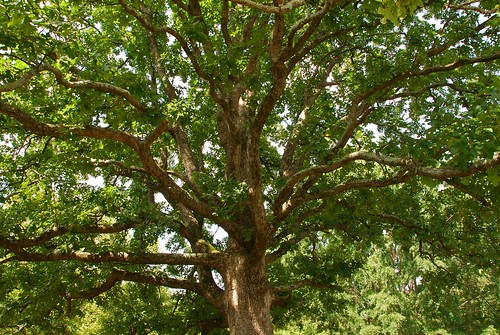
Most of the forests we have today are in the midst of various stages of the process of plant succession. Thus on a hike around Lake Brandt one might come across (even in a thickly wooded area), a large oak tree with old branches spreading out horizontally, a sure sign of a tree having grown up in an open space with no competition from neighboring trees, and with no need to waste resources in a race to the top of the canopy. Likewise, amidst stands of mixed hardwood and pine woods one will come across a row of old red cedars, marking no doubt an old fence line dividing field from field.
Had we been able to walk into what is now Guilford County 250 years ago we would have found largely mature hardwood forests, though even some of those forests would have grown up from fields cleared by Indians long before. These mature piedmont forests would have been characterized by a dense high canopy made up primarily of white oak, chestnut, hickory, southern red oak, and tulip poplar, the lower part of the canopy itself perhaps a hundred feet high. At ground level the field of view would have been dominated by large tree trunks spaced much farther apart than we are accustomed in our woods today. Tree trunks would have exceeded two feet in diameter for the great white oaks, and up to four or five feet in diameter for tulip poplars. The forest floor would have been relatively clear of brush, with somewhat of a park-like feel. Under this think canopy would have been scattered dogwood, sourwood, ironwood, redbud, beech, and other smaller trees.
Creek bottoms would have been dominated by huge sycamore trees up to six or more feet in diameter, along with massive tulip poplars, with great beeches and maples on the bluffs.
Through these forests ran many well worn paths, some used by Indians, and many packed and cleared of undergrowth by traveling herds of buffalo. It is hard to believe that in our little section of North Carolina, as recently as 250 years ago, there would have been an abundance of buffalo, wolves, elk, and eastern mountain lions, in addition to the common animals we still see today. It was a wild and often dangerous place!
Clearing this land was not for sissies, but cleared it was, in time almost every single bit of it.
Today we have the privilege of watching many forests coming to regain some of their earlier splendor. With agriculture waning in economic significance, there is the likelihood that if we can set aside enough of the tracks of land that are left, maybe our children and children’s children will have even more opportunity than we had of knowing what it would have been like to wander a piedmont forest of long ago.
A while back I had an office in a building near the corner of Westridge Road and Battleground Avenue. There was a parking area that backed up to a gas station, to one neighbor’s back yard, and to a side road called Nathaniel Street. There was a small buffer of a few feet between the parking lot and each of these different bordering pieces of land.
One day while sitting in the parking lot I wrote the following. I call it “Guilford Trees.” I was speaking at first of the small little spaces of trees surrounding the parking lot.
In these rather small spaces a variety of typical local trees are reaching and stretching for sunlight. There is a young sycamore maybe 8 inches in diameter, the trunk completely white, that has bent and wound its way to its spot in the sun. From it hangs many of last fall’s sycamore balls. There are a couple of sweet gum trees, each with its component of unfallen sweet gum balls dangling as they do. There are several young tulip poplars growing tall and straight trying to outrace as it were all others to the open sun. There is a loblolly pine tree (most common tree of my hometown), several Virginia pines, a few maples, a red oak, a dogwood, a white oak, a black locust, and a small hickory tree.
300 years ago before settlement by European colonists, many of these same kinds of trees would have made up the mature forests of the rolling hills and stream bottoms of what is now Guilford County.
It is highly likely that over the course of time well over 95% of the land in Guilford County has at some point been cleared for crops. What has not been cleared for crops has been logged for wood. There are no known stands of “virgin” or even mature climax forest in Guilford County.
In fact, most of the land has been cleared several times over again. The remaining forested parts of our county, even in the creek and river bottom lands, contain second third or even fourth growth forest.
The early settlers who came down from Pennsylvania and Virginia came to an area almost absent of a local Indian population. The Saura Indians based in the present Eden area to our north and Randolph County area to our south had at one time roamed and hunted and even farmed freely in what is now Guilford County. Because of pressure from marauding Iroquois tribes the Saura had fled from the area before it was setled. Yet, they had left their mark. The first settlers were surprised at the number of open fields filled with tall grasses that would reach up to the height of a man’s chest riding on a horse.
But mostly the land was continuous forest. Early settlers cleared the forests for crops lands, usually using poor farming techniques, and either cleared more land or moved on when the soil was depleted or eroded away. Fields would convert back to forest, which future farmers and settlers would clear and log again.
Not only were the forests cleared for growing crops, but the trees were needed for fuel for fireplace and furnace, as well as for building supplies – for wheels and casks and barrels and furniture. Many trees were cut and exported for use by the military or by industries growing up around the country.
Most of the forests we have today are in the midst of various stages of the process of plant succession. Thus on a hike around Lake Brandt one might come across (even in a thickly wooded area), a large oak tree with old branches spreading out horizontally, a sure sign of a tree having grown up in an open space with no competition from neighboring trees, and with no need to waste resources in a race to the top of the canopy. Likewise, amidst stands of mixed hardwood and pine woods one will come across a row of old red cedars, marking no doubt an old fence line dividing field from field.
Had we been able to walk into what is now Guilford County 250 years ago we would have found largely mature hardwood forests, though even some of those forests would have grown up from fields cleared by Indians long before. These mature piedmont forests would have been characterized by a dense high canopy made up primarily of white oak, chestnut, hickory, southern red oak, and tulip poplar, the lower part of the canopy itself perhaps a hundred feet high. At ground level the field of view would have been dominated by large tree trunks spaced much farther apart than we are accustomed in our woods today. Tree trunks would have exceeded two feet in diameter for the great white oaks, and up to four or five feet in diameter for tulip poplars. The forest floor would have been relatively clear of brush, with somewhat of a park-like feel. Under this think canopy would have been scattered dogwood, sourwood, ironwood, redbud, beech, and other smaller trees.
Creek bottoms would have been dominated by huge sycamore trees up to six or more feet in diameter, along with massive tulip poplars, with great beeches and maples on the bluffs.
Through these forests ran many well worn paths, some used by Indians, and many packed and cleared of undergrowth by traveling herds of buffalo. It is hard to believe that in our little section of North Carolina, as recently as 250 years ago, there would have been an abundance of buffalo, wolves, elk, and eastern mountain lions, in addition to the common animals we still see today. It was a wild and often dangerous place!
Clearing this land was not for sissies, but cleared it was, in time almost every single bit of it.
Today we have the privilege of watching many forests coming to regain some of their earlier splendor. With agriculture waning in economic significance, there is the likelihood that if we can set aside enough of the tracks of land that are left, maybe our children and children’s children will have even more opportunity than we had of knowing what it would have been like to wander a piedmont forest of long ago.
Monday, July 13, 2009
My Flapper Grandmother (Nanny)
 This is far and away the most-viewed picture on my Flickr site. It is of my grandmother Mary Sue Gillespie, my dad's mom, before she was married to my grandfather I think, and in a beautiful 1920's outfit. The condition of the 80+ year old print was outstanding, and it made for a great scan. "Nanny" was always a classy lady, and a wonderful guide and help and friend to me. I just thought I'd share this photo with you all again.
See my Flickr Set - Nanny.
Thursday, July 09, 2009
Patsch, A Village in Western Austria
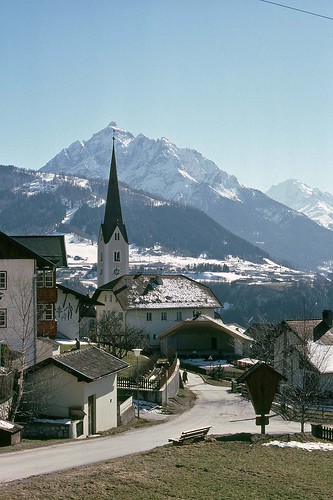
Got nostalgic about Austria today,, so I went back and looked at some pictures that I took in early April 1978. This little village in Western Austria is called Patsch. In our train tour around the continent we had wearied of the rush and decided to spend a little time in one place, and took a bus ride out to this village. Thanks to Flickr friends for helping me identify the place - I had forgotten.
More Europe in 1978 pictures.
Saturday, July 04, 2009
Purple Rock - Badlands SD
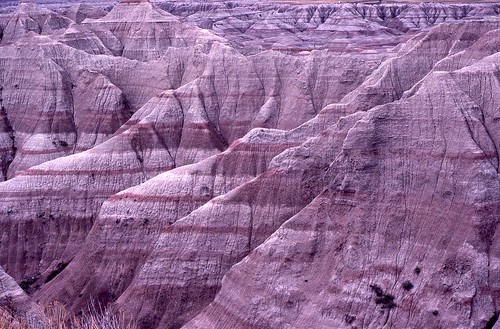
I took this on a drive out to Vancouver in August 1980 with my dad. We had taken a detour off I-90 so as to go through the Badlands and we came up on a helicopter - an OLD looking helicopter - sitting on the dirt outside a little shack, with a sign advertising rides. He looked at me and I looked at him and he said "what the hell." So we pulled over. We walked into the shack and there was a very, well, worn looking woman, and she called for "Frank" or whatever his name was, and Frank came stumbling out of the back half asleep. "Want a ride," he said. My dad looked at me, and I looked at him, and he said "what the hell" (again). So Frank started up the chopper and off we went. It was way fun! Dad and I had a blast and got some good pictures too.

Wednesday, July 01, 2009
Evolution Revolution Devolution
OK, I admit, the title of this post is dumb. Was just playin'
Anyway, a high school student who currently attends a public school, and who used to attend a private Christian school, asked the following (edited) question about evolution, and I answered as best as I could.
Here is the question...
"Well, I am in Biology this year...my exam in on Friday...and we have been studying the theory of evolution. While we were taking notes in class on evolution the verse from Ecclesiastes came into my head, where it says, "there is nothing new under the sun". Based on the verses before and after that verse I don't really think that it had anything to do with that, evolution I mean, but I was just wondering if it did. It was alot easier at (my fomer school) in science class because we were able to talk about these things from a biblical perspective, but being in a public school that is not how it is taught, or how the discussions go (though, really there are no discussions...it is just accepted as fact). So, I don't know. I get confused because some of it makes since...and then all of a sudden the teacher writes something that I am to copy down and I cannot see how anyone could believe it. So, there you go..."
Great question, don't you think?
And here is my answer...
"Dear ****,
You're right, the verse in Ecclesiastes has nothing to do with evolution, though it does speak to any and all ideas that come to man. Philosophically speaking, in terms of how people so quickly and easily jump from evolution to evolutionism, that is, from a scientific/historic theory of development to a purely materialist view of reality, then it's not new under the sun.
You're also right, in public school for the most part one cannot look at this or most other topics from a biblical perspective, or from a Buddhist perspective, or a Hindu perspective, or Scientology perspective, etc. It's a good thing and a bad thing.
I would venture to say that at most Christian schools they don't really look at the topic from all perspectives either (even if the discussion is more open) because they don't take evolution seriously enough to evaluate it and examine and respect it as the powerful model that it is. In my opinion one cannot speak with credibility to a matter if one does not understand it. I have found evolution too easily reduced to silly cliches by those who like it and those who don't.
Yes indeed, some of it makes sense. In fact, a lot of it makes sense. Not all of it makes sense to me or anyone else, but it is a powerful model or framework for understanding change - especially biological - over time.
We have to remember though that the processes that add up to evolutionary theory are strictly impersonal and with no purpose whatsoever. Evolutionary change is not progress; it is just change. There is no "point" to it. But, since we have a hard time swallowing that, we slip personal language into the process. We give the process "purpose."
On the other hand, and this is important, all scientific study has to have a kind of atheistic methodology. If you want to cure cancer, you find the mechanisms that cause it and you don't assume that the gaps of knowledge are to be filled in by God. We don't just say "God made cancer" and let it go at that.
In a similar way if we are curious about how so many of the plants and animals on an isolated island (like Madagascar) are so different, we don't just say "God made them that way," we try to understand how it is that they are or became different. There is nothing wrong with the impulse to want to understand that. That impulse is a significant part of what makes us human beings.
If you take both the Bible and science seriously, which you should, you will grapple with this issue most of your life one way or another. Just try to learn and understand as much as you can.
More later,
Mr. G."
Anyway, a high school student who currently attends a public school, and who used to attend a private Christian school, asked the following (edited) question about evolution, and I answered as best as I could.
Here is the question...
"Well, I am in Biology this year...my exam in on Friday...and we have been studying the theory of evolution. While we were taking notes in class on evolution the verse from Ecclesiastes came into my head, where it says, "there is nothing new under the sun". Based on the verses before and after that verse I don't really think that it had anything to do with that, evolution I mean, but I was just wondering if it did. It was alot easier at (my fomer school) in science class because we were able to talk about these things from a biblical perspective, but being in a public school that is not how it is taught, or how the discussions go (though, really there are no discussions...it is just accepted as fact). So, I don't know. I get confused because some of it makes since...and then all of a sudden the teacher writes something that I am to copy down and I cannot see how anyone could believe it. So, there you go..."
Great question, don't you think?
And here is my answer...
"Dear ****,
You're right, the verse in Ecclesiastes has nothing to do with evolution, though it does speak to any and all ideas that come to man. Philosophically speaking, in terms of how people so quickly and easily jump from evolution to evolutionism, that is, from a scientific/historic theory of development to a purely materialist view of reality, then it's not new under the sun.
You're also right, in public school for the most part one cannot look at this or most other topics from a biblical perspective, or from a Buddhist perspective, or a Hindu perspective, or Scientology perspective, etc. It's a good thing and a bad thing.
I would venture to say that at most Christian schools they don't really look at the topic from all perspectives either (even if the discussion is more open) because they don't take evolution seriously enough to evaluate it and examine and respect it as the powerful model that it is. In my opinion one cannot speak with credibility to a matter if one does not understand it. I have found evolution too easily reduced to silly cliches by those who like it and those who don't.
Yes indeed, some of it makes sense. In fact, a lot of it makes sense. Not all of it makes sense to me or anyone else, but it is a powerful model or framework for understanding change - especially biological - over time.
We have to remember though that the processes that add up to evolutionary theory are strictly impersonal and with no purpose whatsoever. Evolutionary change is not progress; it is just change. There is no "point" to it. But, since we have a hard time swallowing that, we slip personal language into the process. We give the process "purpose."
On the other hand, and this is important, all scientific study has to have a kind of atheistic methodology. If you want to cure cancer, you find the mechanisms that cause it and you don't assume that the gaps of knowledge are to be filled in by God. We don't just say "God made cancer" and let it go at that.
In a similar way if we are curious about how so many of the plants and animals on an isolated island (like Madagascar) are so different, we don't just say "God made them that way," we try to understand how it is that they are or became different. There is nothing wrong with the impulse to want to understand that. That impulse is a significant part of what makes us human beings.
If you take both the Bible and science seriously, which you should, you will grapple with this issue most of your life one way or another. Just try to learn and understand as much as you can.
More later,
Mr. G."
Turning Stones into Bread
My favorite book on the pastoral ministry was and is "The Art of Pastoring" by David Hansen. I have read it four or five times over the years and given a copy to many people along the way.
In his book Hansen talks about how a person called to be a pastor puts aside the prerogative of what he calls “turning stones into bread” or what I might call “working for a living.” Thus I derive the title of this post from Hansen’s book, though I do not wish to fault him for any bad or erroneous ideas I have come up with on my own!
Technically speaking as a pastor I was not “paid” to do a job as much as “supported” to do that job, in a similar manner as a missionary. OK, that support gets turned into a salary and a paycheck, but the official “call” from the congregation goes like this…”In order that you might devote yourself exclusively to the ministry of the word and pray, we the congregation…”
Once calledin this way, many business instincts are out the window. In my 20 years of pastoral ministry this was one of the most frustrating and also rewarding aspects of the calling.
Although there may have been an indirect correlation between how hard or well I worked on the one hand, and how much money was in the coffers (or in my paycheck) on the other, the pastoral ministry requires that such correlations be far from mind and heart.
If I run a business I can choose to work more hours, spend more money on advertising, or develop new proficiencies with the motive or goal of having more business and as a result more money. I may fail in those efforts, but there is nothing wrong with those efforts or their motivation.
Granted, one would hope that I see some greater good being served through my work, but seeking to provide better for myself and family is a perfectly decent motivation. It isn’t in the church. The moment I am connecting anything I do as a pastor with an increase in “business” (more money coming in) and the normally concomitant increase in “salary,” well, I have profaned the calling and am worthy only to be cast out of it.
Just think of the mischief to which such a motivational correlation would lead . First, it would cause me to spend more energy “courting” wealthier visitors than poorer visitors. Such favoritism is an obscenity. Second, it would lead me to focus pastoral attention and care more on those who offer possibility of financial return rather than on those who really need the care. Usually in such scenarios the mentally ill, the elderly, and the needy get shorted. Third, it would lead me to focus a church outreach on an affluent neighborhood rather than a poorer neighborhood. There is nothing inherently wrong with outreach in a more affluent neighborhood of course;, well, depending…(This reminds me of the almost universal tendency for church plants to be located in what are, on average, more affluent areas. Something seems wrong with that picture.) Fourth, the motive of “building the business” might be the driving force for all sorts of interesting and hip advertising campaigns. That would be bad.
Had he not been called to fast, and were he not being tempted to distrust his Father, there may have been nothing wrong with Jesus turning a stone into bread. Likewise as a pastor I gave up the right to work for my personal well being and benefit, especially financially. I gave up, as it were, the right to turn stones into bread.
On the positive side giving up that right forced me to trust and to pray more. God’s faithful provision over the years for my family’s needs also trained me to attend to the essentials of the calling while being able to rest in the knowledge that He had taken care of us all along the way and would continue to do so.
I was raised in a family of small businesses – my dad, his parents, my mother’s parents, my siblings, and so forth. I sought out work as soon as I was old enough to push a mower, and always had money. If I ran low I went out and made more money. If I needed to I advertised. If I needed to I sought work in the rich neighborhoods rather than the poor ones. If I needed to I worked dawn to dusk day after day.
And so, on the negative side, giving up the “right” to turn stones into bread went against almost every instinct I had and have. This reminds of my first rugby game at Clemson. I played left wing, and I remember on about our first offensive move down the field, after the ball came to me, my football instinct kicked in. I saw a crease and I cut and I ran for it. Had it been football I would have made a twenty yard gain, gotten a first down, and lots of pats on the head. But it was rugby. All I did was cause our team to lose possession once I was down. I got a few knocks on the head for being stupid, that’s about it.
After being well trained in the ministry mindset I am now back in that other world. All in all, I think I like it. It’s scary in a whole different way, but I am enjoying the opportunity to think creatively about how to survive.
As you think of your pastor or rabbi or priest, remember the unique challenge it may be to him or to her to give up the right to turn stones into bread. Be generous and do what you can to allay the anxieties that may eat away and tempt him or her to take that stone, that calling to trust and wait while being devoted to word and prayer, and turn it into bread. The temptation is always there. It can be insidious.
In his book Hansen talks about how a person called to be a pastor puts aside the prerogative of what he calls “turning stones into bread” or what I might call “working for a living.” Thus I derive the title of this post from Hansen’s book, though I do not wish to fault him for any bad or erroneous ideas I have come up with on my own!
Technically speaking as a pastor I was not “paid” to do a job as much as “supported” to do that job, in a similar manner as a missionary. OK, that support gets turned into a salary and a paycheck, but the official “call” from the congregation goes like this…”In order that you might devote yourself exclusively to the ministry of the word and pray, we the congregation…”
Once calledin this way, many business instincts are out the window. In my 20 years of pastoral ministry this was one of the most frustrating and also rewarding aspects of the calling.
Although there may have been an indirect correlation between how hard or well I worked on the one hand, and how much money was in the coffers (or in my paycheck) on the other, the pastoral ministry requires that such correlations be far from mind and heart.
If I run a business I can choose to work more hours, spend more money on advertising, or develop new proficiencies with the motive or goal of having more business and as a result more money. I may fail in those efforts, but there is nothing wrong with those efforts or their motivation.
Granted, one would hope that I see some greater good being served through my work, but seeking to provide better for myself and family is a perfectly decent motivation. It isn’t in the church. The moment I am connecting anything I do as a pastor with an increase in “business” (more money coming in) and the normally concomitant increase in “salary,” well, I have profaned the calling and am worthy only to be cast out of it.
Just think of the mischief to which such a motivational correlation would lead . First, it would cause me to spend more energy “courting” wealthier visitors than poorer visitors. Such favoritism is an obscenity. Second, it would lead me to focus pastoral attention and care more on those who offer possibility of financial return rather than on those who really need the care. Usually in such scenarios the mentally ill, the elderly, and the needy get shorted. Third, it would lead me to focus a church outreach on an affluent neighborhood rather than a poorer neighborhood. There is nothing inherently wrong with outreach in a more affluent neighborhood of course;, well, depending…(This reminds me of the almost universal tendency for church plants to be located in what are, on average, more affluent areas. Something seems wrong with that picture.) Fourth, the motive of “building the business” might be the driving force for all sorts of interesting and hip advertising campaigns. That would be bad.
Had he not been called to fast, and were he not being tempted to distrust his Father, there may have been nothing wrong with Jesus turning a stone into bread. Likewise as a pastor I gave up the right to work for my personal well being and benefit, especially financially. I gave up, as it were, the right to turn stones into bread.
On the positive side giving up that right forced me to trust and to pray more. God’s faithful provision over the years for my family’s needs also trained me to attend to the essentials of the calling while being able to rest in the knowledge that He had taken care of us all along the way and would continue to do so.
I was raised in a family of small businesses – my dad, his parents, my mother’s parents, my siblings, and so forth. I sought out work as soon as I was old enough to push a mower, and always had money. If I ran low I went out and made more money. If I needed to I advertised. If I needed to I sought work in the rich neighborhoods rather than the poor ones. If I needed to I worked dawn to dusk day after day.
And so, on the negative side, giving up the “right” to turn stones into bread went against almost every instinct I had and have. This reminds of my first rugby game at Clemson. I played left wing, and I remember on about our first offensive move down the field, after the ball came to me, my football instinct kicked in. I saw a crease and I cut and I ran for it. Had it been football I would have made a twenty yard gain, gotten a first down, and lots of pats on the head. But it was rugby. All I did was cause our team to lose possession once I was down. I got a few knocks on the head for being stupid, that’s about it.
After being well trained in the ministry mindset I am now back in that other world. All in all, I think I like it. It’s scary in a whole different way, but I am enjoying the opportunity to think creatively about how to survive.
As you think of your pastor or rabbi or priest, remember the unique challenge it may be to him or to her to give up the right to turn stones into bread. Be generous and do what you can to allay the anxieties that may eat away and tempt him or her to take that stone, that calling to trust and wait while being devoted to word and prayer, and turn it into bread. The temptation is always there. It can be insidious.
Tuesday, June 23, 2009
I'm Not Dead Yet, Am I?
So, a professional colleague and friend called me yesterday wanting to know how I was doing. He had heard that I had resigned from the pastorate. I think he wanted the scoop. That is fine and good, but I have learned something interesting in many many such conversations over the last month.
Many people who have talked to me about my resignation seem to view leaving the pastoral ministry as like a death, and thus they talk about it as they would talk at a funeral - quietly, slowly, reverently, heavily, and sadly. I suppose every change is a kind of death. But I don't think that if I had gone from being a CPA to selling organic food at the Farmer's Market that people would have the same view.
It seems out of keeping with Reformed Theology that recognizes the fundamental dignity and significance of each kind of vocation and work. I have never for a moment believed that my work as a pastor was of greater significance than another person's work as a teacher or a businesswoman or brick mason. Likewise, if someone who had been teaching school for a long time decided to go into business instead I don't think I'd miss a beat, even if life changes contributed to the move.
Speaking of teachers, I remember back when I taught high school running into students at the grocery store. They would look at me with some confusion of mind as if to say "He eats?" "Yeah I eat, and I poop too." So there.
Which reminds me to be patient. If almost-adult students had a hard time seeing me apart from my "teacher" mantle or mode, then it's no wonder that people who have known me for 20 years as a pastor would have the same challenge seeing me apart from my "pastor" mantle or mode. Not all do, but many do, maybe most.
Perhaps in some deeper way all along, this very issue has made me a somewhat reluctant pastor. Perhaps I always chaffed at the difficulty of being seen as just a person, flawed and with feet of clay, with lot of things that interest me other than the Bible. I'm thinking lately that this very issue has been worming around in me for years.
I remember back when I was coaching a softball team there was a guy - one of the kid's parents - who often helped out with practices. We talked a lot. He was a very smart and funny guy, and laced his speech with certain profanities that added a kind of salt and spice to what he said. He was a good cusser.
I never ever ask people what they do for a living, but eventually he asked me. "Great," I thought, "there goes the relationship." I told him I was a pastor. I'm not sure he knew what I meant at first. He wasn't southern and so he didn't think "preacher." "You mean like a priest?" he asked. "Sort of," I answered.
Now this has happened several times with me, and almost always people start acting and speaking really differently. I've always hated that. I pray, "Lord, please don't let them ask me THAT question." But in this case he did ask, and, after my answer, he paused a moment as if to think about it, and then said something like "#*%&*, I wouldn't have thought." I loved that guy.
So, for real, I'm not dead, my faith isn't dead, and well, my vocational life isn't dead, as in, "Oh now that I have fallen from my calling I have to do SOMETHING (inherently insignificant) to make money."
Well, I do, have to make money that is. A lot. And so I continue to look and pray for a nice big regular job. And in the mean time, God is providing several smaller jobs, including a tutoring gig starting tomorrow. (I've always liked tutoring - science, math, composition, etc. So call me....) I was thinking today as I hobbled down Elm Street that it would be cool to lead tours of downtown Greensboro - hmmm, could I make any money at that?)
So, please don't tell but I am actually enjoying branching out. I don't feel like I am in a vocational funeral. It feels more like a kind of change of season, maybe summer to fall, and I like the breeze.
Monday, June 22, 2009
Twitter: From Mother Lode to Overload
So, I’ve been fiddling around with Twitter for a couple of months now. As I have come to understand how to use it better and search for people of similar interests I have discovered one of its more powerful features or attributes – a feature so powerful that I don’t yet know what to do with it. That feature? Twitter as a content provider!
For example I am following a lot of folks who are into various aspects of gardening. Not only do these gardeners share daily tasks (“Just finished harvesting the rhubarb”), but they share all sorts of links about every aspect of gardening imaginable. These links generally are to very thoughtful and informative Web sites or blog posts from which I can learn a lot. I have received
more of these than I can ever read!
The same goes for almost every other “topic” that I can think of. It’s like I’ve hit the mother lode of information, so much that I am suffering from information overload, and need to figure out a way, such as with third party apps, to save and categorize all this amazing information.
I ponder what this all means to how we think and work and gain information and expertise. But it is a remarkable phenomenon at any rate.
Friday, June 19, 2009
The Birds
Wednesday evening I came home late from the office - it must have been about 8:00. I parked the van on the road near the driveway (on the cul de sac). As I got out of the car some birds caught my eye, and I stopped to look. Apparently it had just rained, and the water from the pavement on the cul de sac was evaporating. I stood in the middle of the road.
Then they came - the birds that is, first a couple and then more and more. I think they may have been swifts or swallows. They would fly in very fast, then do an arc like an ice skater and be off, circling again a couple of times around trees or just in the air. Their wing beats were incredibly fast. Several flew straight away from me and their wings were just a blur surrounding their body. They would dive into the "asphalt zone" on a steep glide, turn on a dime, zig-zag, and be off again on a circle around a near by tree or just up in the air.
Watching them in front of me, above me, behind me I kept thinking of how an anti-aircraft gunner might feel with planes coming from all directions. On several occasions one or another of them would fly within feet of my head and I could hear the wings and the high pitched twittering. They acted as if I were not even there.
I assume that there were insects rising up perhaps with the humid evaporation off the asphalt, but I could not see anything. The birds zig-zaggy change of direction as they entered the "asphalt zone" suggested feeding, but I could not tell for sure.
There is something joyful and humbling about being in the presence of another creature's life and activity, especially when we are completely irrelevant to that creature. There is a sense of transcendence when we are brought out of ourselves into self forgetfulness and wonder at that which is truly "other." Our overly self conscious selves need this - but it has to come to us, as if by accident, and we have to be prepared to be caught up in it.
The birds kept on whipping in and out and around. I stood in the midst of them for maybe 10 minutes and eventually went into the house. It was the highlight of my week.
Friday, June 12, 2009
Working It and Keeping It
It says in Genesis 2:8 that “the LORD God planted a garden in Eden, in the east, and there he put the man whom he had formed.” It goes on to say in 2:15 that “The LORD God took the man and put him in the garden of Eden to work it and keep it.” All this of course follows, and to a great extent explains, the more general description of man’s purpose as found in Genesis 1:28 - And God blessed them. And God said to them, “Be fruitful and multiply and fill the earth and subdue it and have dominion over the fish of the sea and over the birds of the heavens and over every living thing that moves on the earth.”
OK, so back to our yards…for those of you that accept the importance and significance of what we read in Genesis above…
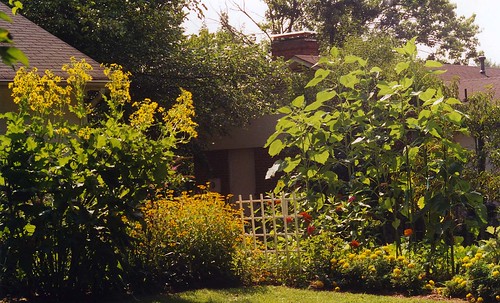
Our yard or garden is one little spot under the sun that God has given us that we might exercise dominion over His creation. We can rightly say indeed that by God’s providence He Himself has given our yard or garden to us and placed us in it. Genesis 2 helps understand the nature of this dominion. We are placed in our little bit of creation “to work it and keep it.”
So what does exercise dominion in the sense of “working it and keeping it” look like?
I think that “working it and keeping it” means making our place as beautiful as we reasonably can, since God made His world to be beautiful and pleasing, reflecting back as it were the beauty of His own person. As He created, He Himself liked what He saw, and He pronounced it “good.” I wonder if He would say “good” as to how we have worked and kept our bit of creation? Beauty is important to the Creator of all that is beautiful, and it is important to our neighbor. Indeed, we have more than enough ugliness to contend with on a day to day basis as it is. Beauty is itself a kind of sanctuary.
"Working it and keeping it” means that we seek to extract as much potential goodness out of our little piece of God’s earth as we can. This may mean working the soil to make it even richer, or planting trees and shrubs and flowers that will draw out the fruitfulness of the earth in beautiful and exciting ways. Many of these plants will then provide food for our animal friends. We can plant food for ourselves too – enough even to give some to our needy neighbors. In so doing we extract out a goodness that was there only as it were in waiting for us.
“Working it and keeping it” includes seeking to bless not just other people but all of God’s creatures in and by the bit of the earth He has loaned to us. Birds, mammals, insects, reptiles, amphibians, arachnids – all these can find a home and sources of food in our little spot of the earth. Each adds richness to creation and joy to human life (yes, even spiders when adequately understood). I think of the various animals being brought before Adam (who was alone), each of which (with affection I believe) he named (and blessed in so doing), and I can’t help but think that we were meant to be friends to the animals, and a means by which God blesses them. I believe that animals (especially the higher animals of course) experience a kind of happiness in living, in simply being unselfconsciously what they are. And we get to help bring that about, working in cooperation with Him “who fathers-forth whose beauty is past change. Praise Him.”
“Working it and keeping it” would include I believe care for our human neighbors all around us – within sight and earshot, but also downwind and downstream. Do I really wish to disturb my neighbor’s peace with my power blower? Do I want to pollute the air and water of all my neighbors downstream and downwind? I don’t. Neither do I wish to bring harm to God’s creatures downwind and downstream either.
“Working it and keeping it” could well include providing a place of beauty and haven and rest for needy and wounded souls battered by the difficulties of this life. Even though beaten and battered ourselves, we can extend hospitality to others by giving them a place to rest and to refresh. The smallest yard can be this kind of place, even a porch garden.
I remember many times in my life when I have been struck at how an extremely small and humble home and yard can be made into a haven of beauty. This can happen amidst urban blight, in a small abode tucked next to a freeway, or in a poor rural cottage. Living well in this way is not restricted to the rich or to those with lots of money to spend on their properties. Within humble means we can bring beauty out of ugliness, working and keeping the little spot in which God has placed us.
Obsessively Green Gardening
I was driving out of my neighborhood this morning and passed a crew working on a yard, doing the typical maintenance stuff with power mowers, power blowers, power edgers, etc. Their van was parked on the street, its name written boldly across the side. I would not have paid the van any attention except that that I saw the word “Green” in the name. I think the van itself was green. Granted, the crew was cutting green grass, and their van was colored green, but I see anything else about the operation that was “green.”
Which got me thinking again…What would uber-green (as in hyper green – better yet, let’s call it "obsessively green"), what would obsessively green gardening look like, especially in the urban/suburban/exurban setting?
Suburban gardening and yard maintenance is noteworthy for its pollution and toxicity. Almost all power equipment pollutes the air much more even than do cars. Then there is the noise – oh my has suburbia become a NOISY place to live. Power blowers are the worst, but power mowers and weed whackers certainly add to the noise pollution.
Water pours off roofs, driveways, and lawns carrying with it all sorts of nasty stuff – grease, oil, tire and asphalt residue from the driveway and roof; animal waste, pesticides, herbicides and fertilizers from the lawn. The runoff goes right into our streams and rivers and lakes. This polluted runoff not only contributes to increased costs for water treatment downstream, but dramatically impacts the ecology of streams and rivers, effecting amphibians and fish and other aquatic animals, and the animals that feed upon them. The horrible state of Jordan Lake is a prime example of one end result of all this.
Are we really comfortable with the trace elements of these toxic chemicals in our water supply? There is no treatment that gets rid of it all.
We grow grasses and plants and trees that are not native to our area and not adapted to the particulars of our climate and soil, so we coddle them with excessive amounts of water, or douse them with fungicides when the clay soil is too moist. We use expensive treated water to keep these water-sucking non-native plants alive, water that could and should be preserved for other needs. We could reduce demand for treated water by catching roof runoff in rain barrels, or even (for those who can do so), catch roof and general runoff with cisterns. Large properties can have beautiful rain gardens where much of this water is allowed time to seep more slowly into the ground water supply, and at the same time provide habitat, food, and shelter for birds and small reptiles and mammals.
Most of us love it when birds and other wildlife show up in our yards and gardens. I think everyone loves bluebirds, watching them perched on a tree limb gazing downward, diving to the ground to snatch up a bug, and returning to their perch. And what child does not love robins! I watched a robin a few weeks ago put about ten worms in his mouth before returning to a nest. Robins also eat insects, the kind that live in a biologically healthy lawn.
Bluebirds need to eat insects in order to survive. We love bluebirds, yet we succumb to pesticide ads that promise to “kill everything” in our yards, a promise which I suspect is pretty truthful as advertising goes. In the “perfect lawn” as advertised on TV there are no bugs, few worms, and no weeds - just grass, the whole lawn looking and being little different than AstroTurf. It is a single crop farm, the crop being grass, with everything else dead.
The herbicides that kill the broadleaf “weeds” that interrupt the perfection of our lawns also seep into the soil to be ingested by worms which robins then feeds to their chicks. The leaf eating insects that manage to survive the initial dousing ingest huge amounts of this poison as they feed upon the grasses and other remaining plants (if there are any), which said bluebird takes into its body with each bug he eats.
On Memorial Day weekend I saw a lady out mowing her lawn with a manual rotary mower. The mowed lawn looked quite fine. No air pollution there! There have long existed manual edgers. There are even manual blowers – OK, not really, but I was thinking of rakes and brooms. I've yet to find an emissions free tiller other than a shovel and hoe, but we need tillers in this crazy red subsoil we work with in Greensboro. Is there a powerful enough electric tiller out there?
Though they are not pollution free (the electricity comes from a power plant somewhere) there are very good electric versions of most of these same tools.
So these are some of the things I think of when I think of obsessively green gardening. Maybe you have some ideas as well.
Wednesday, June 03, 2009
Picture - Summers Past: Bill in Pecan Orchard
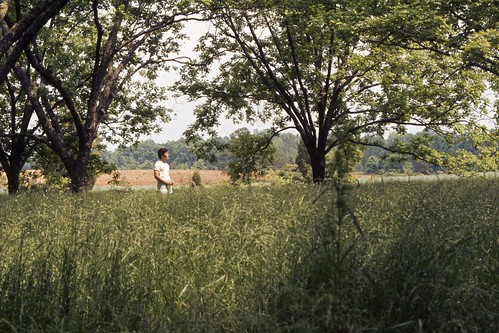
Bill Marshall in a pecan orchard near Due West SC. This was taken on the great SC bike tour of 1976 - Clemson to Ninety Six to Columbia to Charleston to Beaufort to Hilton Head to Savannah and back to Columbia - just four guys and their bikes (well fed and clothes washed each night by friends!)
An Act of Kindness I Appreciate
I know it may seem terribly self serving for me to post this link - but....I was very moved by this kindness towards me, and I just wanted to say "out loud" that I appreciate it very much. Thank you Joe.
Atheist Commentary on Being Proselytized
I may be the last person on the planet who has not seen this video, but it is really excellent. It is an atheist comedian's take on being proselytized by a Christian. I really recommend as worthy of a look for Christians and non Christians alike. Check it out!
Tuesday, June 02, 2009
Picture: Me and Heather at Josh Ritter Show
 It was a great night. Josh ritter does an amazing concert. I am wearing my "concert shirt." My little Heather is all grown up, and great fun to hang out with!
Thursday, May 21, 2009
2009 Webware 100
Career Builder Test
I took a test over at careerbuilder.com and these were my high score areas:
Writing - 93
Teaching- Social Service 88
Outdoors 86
Science - 82
Sales - 71
Administration - 69
Their blurb:
Your highest score was on Writing, which means that you enjoy creative or technical writing. You are also likely to be interested in a broad range subjects, so finding occupations that allow you to exercise these interests would lead to higher work satisfaction for you. You also scored highly on Teaching / Social Service, indicating that you enjoy instructing people in learning new things, helping people solve problems, and assisting others. Your high score on the Outdoors scale means that you like working outdoors, particularly in agriculture with animals and/or plants. This may include professions involving potentially dangerous situations.
Myers Briggs Personality Test
So, I took the Meyer's Briggs test (again) and it tells me I am INFJ - Introverted, Intuitive, Feeling, Judging. Hmmm. Doesn't sound like but it said the results were intenrally consistent. I think i'll take it again when all the spam is out of my system.
This is what a Mr. Joe Butt has to say about INFJ's at http://typelogic.com/infj.html.
I wonder, does this ring true to anyone who knows me?
"Beneath the quiet exterior, INFJs hold deep convictions about the weightier matters of life. Those who are activists -- INFJs gravitate toward such a role -- are there for the cause, not for personal glory or political power.
INFJs are champions of the oppressed and downtrodden. They often are found in the wake of an emergency, rescuing those who are in acute distress. INFJs may fantasize about getting revenge on those who victimize the defenseless. The concept of 'poetic justice' is appealing to the INFJ.
"There's something rotten in Denmark." Accurately suspicious about others' motives, INFJs are not easily led. These are the people that you can rarely fool any of the time. Though affable and sympathetic to most, INFJs are selective about their friends. Such a friendship is a symbiotic bond that transcends mere words.
INFJs have a knack for fluency in language and facility in communication. In addition, nonverbal sensitivity enables the INFJ to know and be known by others intimately.
Writing, counseling, public service and even politics are areas where INFJs frequently find their niche."
Tuesday, May 19, 2009
Missing Link?
I'm Pulling for Kris
Yes, Adam has a better voice and an incredible stage presence, but neither his voice nor his persona appeal to me particularly. And no, this has nothing to do with who is gay and who isn’t. If Kris were gay and Adam not and they sang exactly the same way I’d still pull for Kris. Adam has a world class voice. Unbelievable. But it doesn’t do anything for me. Mariah Carey has a world class voice, but it doesn’t do anything for me either. I prefer Iris Dement. Josh Groban has a world class voice, and I like him, but I’d rather listen to Jackson Browne. What I like about Kris is his talent for adapting songs and putting his particular stamp on them, from Bill Wither’s “Ain’t No Sunshine” to Glen Hansard & Marketa Irglova’s “Falling Slowly” to Kanye West’s "Heartless.”
I expect Adam to win, and either way I wish them both the very best in their musical careers, but I’m pulling for Kris, and I look forward to buying his first record.
I expect Adam to win, and either way I wish them both the very best in their musical careers, but I’m pulling for Kris, and I look forward to buying his first record.
Old Friends
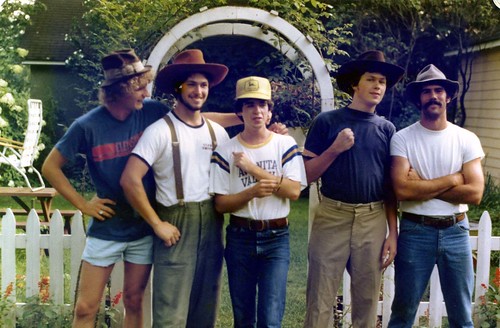 Joel (me), Bill, Skip, Calvin, and Matt at Sherb Naulty's house in Westfield NJ, on way to New England, Summer 1977. We miss you Matt.
Countdown to June 1
Well, since my "All the Rest Have 31" post a couple of weeks ago a lot of you have written to me to share ideas and express concern, and I appreciate it very much. This is a new adventure for me. Indeed, I've had a few new life adventures this year and am certainly learning a lot from each one. Facing the specter of unemployment for the first time in my life helps me appreciate what many folks I know and have known have been through and are going through. I have been sympathetic along the way of course, but not truly empathetic. That has changed. This is a big transition in difficult times.
Some days I feel anxious, but so far most days I feel hopeful and encouraged. Thankfully the church where I have been pastoring for 16 years (Covenant Fellowship - if you don't have a church home you should check it out) is going to help in our transition to whatever is next, so it's not like we starve starting in June - just so you'll know.
So I wanted to try to type out a summary of where I am in this job/vocational search. A few things are coming into focus.
I am finding that it's hard to know how to balance short and long term financial needs, the lower paying present opportunities (which offer no chance of ever paying even the well-trimmed bills) with the higher paying potential opportunities that take more time to find (and offer hope of providing for our needs). It seems best to let the longer term employment search process go out a couple of months before I tie up most of my time with a job that would hinder it. I've asked different people about this issue and have gotten widely different answers. It seems the consensus is to give the longer term a shot first. I will need wisdom.
Though it looks like there might not be a solid existing job prospect out there for a person with my background, especially given the economy, I will keep my eyes and mind open as I talk to people and check notices as to existing jobs. One never knows. I have been a generalist pastor for 20 years, a teacher for five, and have run a couple of businesses, all of which gives me breadth of experience, and a lot of practice in communicating (speaking and writing) and in working with people. So, who knows, something may happen. Call me.
I also will keep exploring teaching jobs in NC. I qualify for "lateral entry" here in Guilford County so at least there is that. Unfortunately, there exist hiring freezes all over the place.
I do have a couple of ideas as to longer term employment, but they each require some retooling in terms of education and fundamental knowledge and skills. Even in my areas of interest and having some experience I am still a little out of date.
I have been - both in pastoral ministry and in life in general - a bit of a generalist. I think I could bring a lot to a small business or an organization but it doesn't perhaps look that way on paper. Rather than bemoan that and get discouraged I think I need to use my age and life experience to my advantage. I get the feeling that whatever is out there for me will take require this generalist experience and tendency, especially my experience communicating and with working with people.
Not sure where else to turn I am looking in the direction of areas that have interested me for some time.
First I have interest in a kind of uber-green horticulture/landscape design business that would focus on things like water conservation and runoff, the use of native plants, reduction of equipment emissions, pesticide and herbicide avoidance, use of organic materials, designing and planting with wildlife in mind, possibly more in a restoration/design/maintenance sense but possibly also in a new construction and community planning sense as well, the latter given my interest in land restoration and habitat reclamation. Second, I am still drawn toward working for a non profit environmental organization, perhaps a land trust or a group like the Nature Conservancy whose mission I am particularly drawn to. In both of these areas I do think need more experience, skill, and knowledge upgrade. This could mean formal schooling or a mix of less formal schooling (certificate programs), volunteer work, and just studying up. I am considering each option.
I am already set up with a growing readership/viewership of my online work, plus I am equipped to make some money offering a few services as I have outlined before. I think I need to take advantage of the exposure that I already have by focusing a decent amount of time contributing content in areas consistent with those two areas of interest. These areas weave together very well by the way. In doing this writing combined with training and volunteering, I can interact with and get to know some of the leaders in the interest areas I have cited.
I continue to draw a fair amount of interest in music, art, photography, stories, and general Christian takes on various issues, etc. I think I should take advantage of that as well, partly because it is a good thing to do, and partly to stay connected to other people.
This week is lining up well. I signed up yesterday for an intensive non profit management certificate program at Duke in June. I am also in conversation with a leader in Nature Conservancy to get her take on what sorts of things I should do to be more marketable at an organization like that. I met yesterday with a friend who wants me to think about helping in a prospective business that would take advantage of my experience in analysis and writing, I am meeting with a writing coach, a local doctor friend who is very active in leadership in the community, am applying for a spot in a local leadership training group, and meeting several other folks for general networking.
It's a process. Prayers, ideas and leads are welcome.
Well, all for now.
Joel
Some days I feel anxious, but so far most days I feel hopeful and encouraged. Thankfully the church where I have been pastoring for 16 years (Covenant Fellowship - if you don't have a church home you should check it out) is going to help in our transition to whatever is next, so it's not like we starve starting in June - just so you'll know.
So I wanted to try to type out a summary of where I am in this job/vocational search. A few things are coming into focus.
I am finding that it's hard to know how to balance short and long term financial needs, the lower paying present opportunities (which offer no chance of ever paying even the well-trimmed bills) with the higher paying potential opportunities that take more time to find (and offer hope of providing for our needs). It seems best to let the longer term employment search process go out a couple of months before I tie up most of my time with a job that would hinder it. I've asked different people about this issue and have gotten widely different answers. It seems the consensus is to give the longer term a shot first. I will need wisdom.
Though it looks like there might not be a solid existing job prospect out there for a person with my background, especially given the economy, I will keep my eyes and mind open as I talk to people and check notices as to existing jobs. One never knows. I have been a generalist pastor for 20 years, a teacher for five, and have run a couple of businesses, all of which gives me breadth of experience, and a lot of practice in communicating (speaking and writing) and in working with people. So, who knows, something may happen. Call me.
I also will keep exploring teaching jobs in NC. I qualify for "lateral entry" here in Guilford County so at least there is that. Unfortunately, there exist hiring freezes all over the place.
I do have a couple of ideas as to longer term employment, but they each require some retooling in terms of education and fundamental knowledge and skills. Even in my areas of interest and having some experience I am still a little out of date.
I have been - both in pastoral ministry and in life in general - a bit of a generalist. I think I could bring a lot to a small business or an organization but it doesn't perhaps look that way on paper. Rather than bemoan that and get discouraged I think I need to use my age and life experience to my advantage. I get the feeling that whatever is out there for me will take require this generalist experience and tendency, especially my experience communicating and with working with people.
Not sure where else to turn I am looking in the direction of areas that have interested me for some time.
First I have interest in a kind of uber-green horticulture/landscape design business that would focus on things like water conservation and runoff, the use of native plants, reduction of equipment emissions, pesticide and herbicide avoidance, use of organic materials, designing and planting with wildlife in mind, possibly more in a restoration/design/maintenance sense but possibly also in a new construction and community planning sense as well, the latter given my interest in land restoration and habitat reclamation. Second, I am still drawn toward working for a non profit environmental organization, perhaps a land trust or a group like the Nature Conservancy whose mission I am particularly drawn to. In both of these areas I do think need more experience, skill, and knowledge upgrade. This could mean formal schooling or a mix of less formal schooling (certificate programs), volunteer work, and just studying up. I am considering each option.
I am already set up with a growing readership/viewership of my online work, plus I am equipped to make some money offering a few services as I have outlined before. I think I need to take advantage of the exposure that I already have by focusing a decent amount of time contributing content in areas consistent with those two areas of interest. These areas weave together very well by the way. In doing this writing combined with training and volunteering, I can interact with and get to know some of the leaders in the interest areas I have cited.
I continue to draw a fair amount of interest in music, art, photography, stories, and general Christian takes on various issues, etc. I think I should take advantage of that as well, partly because it is a good thing to do, and partly to stay connected to other people.
This week is lining up well. I signed up yesterday for an intensive non profit management certificate program at Duke in June. I am also in conversation with a leader in Nature Conservancy to get her take on what sorts of things I should do to be more marketable at an organization like that. I met yesterday with a friend who wants me to think about helping in a prospective business that would take advantage of my experience in analysis and writing, I am meeting with a writing coach, a local doctor friend who is very active in leadership in the community, am applying for a spot in a local leadership training group, and meeting several other folks for general networking.
It's a process. Prayers, ideas and leads are welcome.
Well, all for now.
Joel
Monday, May 18, 2009
Today's Quote: from Apaloosa
"Life has a way of making the foreseeable that which never happens... and the unforeseeable that which your life becomes."
Everett Hitch (narrating, and played by Viggo Mortensen), from Appaloosa
Everett Hitch (narrating, and played by Viggo Mortensen), from Appaloosa
Saturday, May 16, 2009
Today's Lyric: I'll Take My Sorrow Straight
Iris Dement, I'll Take My Sorrow Straight, off The Way I Should
Today's Quote: Age Is Not All Decay
"Age is not all decay; it is the ripening, the swelling, of the fresh life within, that withers and bursts the husk."
George MacDonald, The Marquis of Lossie
British Columbia on My Mind - Howe Sound from Black Tusk
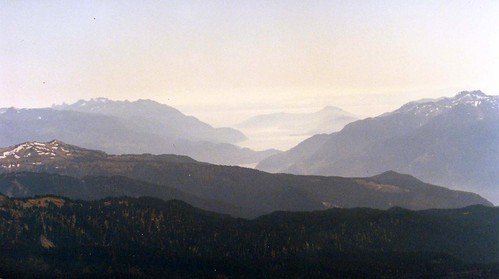
This picture is taken from the top of a volcanic core called The Black Tusk in British Columbia, looking almost slightly to the west of south toward Howe Sound, British Columbia. The trail head to The Tusk is about two hours north of Vancouver. You can see a picture of The Black Tusk from the trail here. And you can see a picture of formerly skinny me atop The Black Tusk here. And you can see a great view of Garibaldi Mountian here.
The trail is nine miles each way, with a 6000 foot elevation change. The last couple of hundred feet elevation-wise goes straight up through a kind of vertical tunnel in the core called "the chimney." You have to sort of shimmy up using leg pressure on the walls. It's really fun. To be honest, the last mile or so of this trail was very very hard. I was not in great shape and was not used to oxygen levels at 8000 feet, especially after walking eight miles already along with a mile elevation change. In the final ascent to The Tusk I thought my heart to was going to blow out of my chest. I contemplated stopping, but then decided I'd rather die right there than turn around (OK, stupid, I know), so I kept going, slowly.
Once I got to the top I took a nap. After that I was so full of energy and adrenaline I ran most of the way down - laughing. It was fun running down the large field of volcanic rock - kind of more like a controlled slide or fall! I did the hike with the brother of a friend of mine - he was in better shape then I was! Oh, one other thing. On the way up a black bear with two cubs crossed the trail about 75 feet in front of us. At first just the adult bear appeared, and stood there staring at us, us staring back, and then I saw the cubs. It was way cool, but then I thought, "Oh my..." Thankfully Mrs. Bear decided we weren't a threat or worth her trouble and the three of them moved along. Whew!
Josh Ritter at Cat's Cradle May 30
And many thanks to my friend Bestin for turning me on to Josh Ritter!
Bill Mallonee Interview - Good Stuff
Thursday, May 14, 2009
Today's Quote: Francis Schaeffer
Francis Schaeffer, Pollution and the Death of Man

Todays Lyric: Only Love
"Only love can make it rain, The way the beach is kissed by the sea."
from "Love, Reign O'er Me," The Who, written by Peter Townshend, vocals by Roger Daltrey, from Quadrophenia
I love this line, every other line, the music, the sound effects, the whole deal. This is an amazing song (with the very best "scream" in all rock music, the closing "Looooooove.")
from "Love, Reign O'er Me," The Who, written by Peter Townshend, vocals by Roger Daltrey, from Quadrophenia
I love this line, every other line, the music, the sound effects, the whole deal. This is an amazing song (with the very best "scream" in all rock music, the closing "Looooooove.")
Wednesday, May 13, 2009
Today's Picture: Dog and Cat Affection
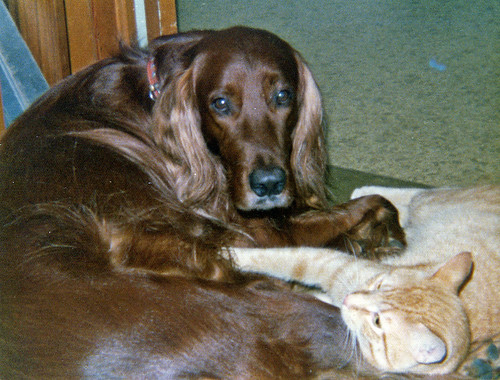
Clancey and Yellow Tabby - we had so many cats I can't remember this cat's name. Here is another picture of them together.
Today's Quote: Friendship
"Hence we picture lovers face to face, but Friends side by side; their eyes look ahead"
C.S. Lewis, The Four Loves
Today's Lyric: Gettin Older
"So scared of gettin older, I'm only good at being young"
John Mayer, from Stop This Train, off Continuum
Tuesday, May 05, 2009
Today's Lyric: from Nothing Like a Train
"when you find there's nothing special yeah,
about that big hole in your heart
'cause everybody's got one
with precious little time to talk about it"
Bill Mallonee and The Vigilantes of Love, Nothing Like a Train, Audible Sigh
about that big hole in your heart
'cause everybody's got one
with precious little time to talk about it"
Bill Mallonee and The Vigilantes of Love, Nothing Like a Train, Audible Sigh
Today's Quote: God Made Us Cultural Beings
Steve Turner, from Imagine: A Vision for Christians in the Arts
Friday, May 01, 2009
Today's Lyrics: How I wish...
Today's Picture: A Family Glimpse into the Depression Years
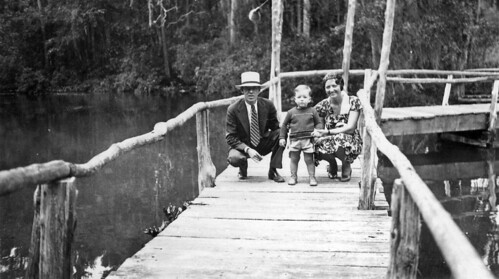
My sister Mary found a "new" batch of old pictures, including this old picture of my dad and his parents. I think this is a great photo, whoever took it - life and fashion in the early 1930's. I think this is in Florida but am not sure.
In the picture:
Curtis Claunch Gillespie, Sr. (my grandfather)
Curtis Claunch Gillespie, Jr. (my dad)
Mary Sue (Andrews) Gillespie (my grandmother)
Curtis Claunch Gillespie, Jr. (my dad)
Mary Sue (Andrews) Gillespie (my grandmother)
All the Rest Have 31 - Countdown to Unemployment
So, today I begin my 31 day countdown to unemployment.
I should be freaking out. I don't know why I'm not. I'd like to say that it is due to some deep abiding trust in God and quiet confidence in His provision. In truth He has always provided for me and my family over the years. Maybe that is it. I don't know.
It is a pretty sucky time to be unemployed. If I listened to all the doom and gloom I might want to go jump off a building, but I don't. I think it is a good time to think about opportunity. Yes, I'll go with that.
I have almost never really looked for work - it always seems to have come to me. Yes, sometimes God has me go through many of the necessary motions, but then provides me with something that is in no way connected with anything I tried to do.
I have a feeling that there isn't really a "job" out there with my name on it. Now if you were just going to call me and offer me a job please don't let that last comment deter you. Call me :-).
It feels like a time to find the right niche that fits my interests and core competencies and experience and build work from there. I could be wrong, but that's what it feels like.
There is the horticulture angle. I have a niche idea there - would share it but I don't want anyone to steal it. I like the horticulture angle.
There is the teaching angle. Not much hiring going on. And the pay is not so great. But I like kids.
There is the writing angle. That is very appealing to me because I love (as I have shared) writing about "nature" and environmental issues, local history, stories of life in the 60's, sports, cultural issues, art, theology and biblical studies, etc. And I love putting my pics up there. I could work that via a non profit and also, as hits go up, adding in advertising and such. It could be a piece of the puzzle. I would need a few patrons.
related to that is writing books. I think I have 15-20 books in me over the next decade. My good friend Sherb has a great book idea. Meanwhile something has to pay the bills.
I have talked to a friend about how to get better in photography. There are some cool "Photography Institutes" out there where I could get a lot better. For me photography is more of an enhancement to my writing. I feel more like a photo journalist than a photographer per se. I'd like to get better.
Then there is the non profit angle - maybe environmental non-profit. Hmmm. I've been working with volunteers for 20 years. Do I need a break from that? I need to think about it some more.
I have thought about school. if there were a program that I could start and finish in a school year plus a summer that would greatly enhance either business success or employable I'd be interested, but I can't find one.
Then there are the several "services" I can offer - digitizing pretty much anything, restoring old photographs (not as well or as expensively as the other local businesses), tutoring math and science and writing, working to fill in family histories and putting together digital scrapbooks, de-gunking computers, filling in as a teacher or "preacher" if the need arises, etc. Hmmm.
The there is exploring various ways to market my pictures via various products that include them. My 'lil sis and my daughter like that idea. I need a salesman!
And then there is some kind soul like you who just happens to have a job with my name on it. Please, do call.
30 more days after today...
I should be freaking out. I don't know why I'm not. I'd like to say that it is due to some deep abiding trust in God and quiet confidence in His provision. In truth He has always provided for me and my family over the years. Maybe that is it. I don't know.
It is a pretty sucky time to be unemployed. If I listened to all the doom and gloom I might want to go jump off a building, but I don't. I think it is a good time to think about opportunity. Yes, I'll go with that.
I have almost never really looked for work - it always seems to have come to me. Yes, sometimes God has me go through many of the necessary motions, but then provides me with something that is in no way connected with anything I tried to do.
I have a feeling that there isn't really a "job" out there with my name on it. Now if you were just going to call me and offer me a job please don't let that last comment deter you. Call me :-).
It feels like a time to find the right niche that fits my interests and core competencies and experience and build work from there. I could be wrong, but that's what it feels like.
There is the horticulture angle. I have a niche idea there - would share it but I don't want anyone to steal it. I like the horticulture angle.
There is the teaching angle. Not much hiring going on. And the pay is not so great. But I like kids.
There is the writing angle. That is very appealing to me because I love (as I have shared) writing about "nature" and environmental issues, local history, stories of life in the 60's, sports, cultural issues, art, theology and biblical studies, etc. And I love putting my pics up there. I could work that via a non profit and also, as hits go up, adding in advertising and such. It could be a piece of the puzzle. I would need a few patrons.
related to that is writing books. I think I have 15-20 books in me over the next decade. My good friend Sherb has a great book idea. Meanwhile something has to pay the bills.
I have talked to a friend about how to get better in photography. There are some cool "Photography Institutes" out there where I could get a lot better. For me photography is more of an enhancement to my writing. I feel more like a photo journalist than a photographer per se. I'd like to get better.
Then there is the non profit angle - maybe environmental non-profit. Hmmm. I've been working with volunteers for 20 years. Do I need a break from that? I need to think about it some more.
I have thought about school. if there were a program that I could start and finish in a school year plus a summer that would greatly enhance either business success or employable I'd be interested, but I can't find one.
Then there are the several "services" I can offer - digitizing pretty much anything, restoring old photographs (not as well or as expensively as the other local businesses), tutoring math and science and writing, working to fill in family histories and putting together digital scrapbooks, de-gunking computers, filling in as a teacher or "preacher" if the need arises, etc. Hmmm.
The there is exploring various ways to market my pictures via various products that include them. My 'lil sis and my daughter like that idea. I need a salesman!
And then there is some kind soul like you who just happens to have a job with my name on it. Please, do call.
30 more days after today...
Thursday, April 30, 2009
Happy Birthday Dad - I Miss You
 I have posted this picture before. It is my favorite photo of my dad, taken at the Gator Bowl, December 1977. Clemson got stomped by Pitt but it was still a lot of fun. Dad would have been 79 today. My sister Mary just found a great batch of old photos of Dad - I can't wait to scan them.
More pictures of Curtis Claunch Gillespie, Jr., April 30, 1930 to June 26, 1989.
Thursday, April 23, 2009

Today's Quote: Nose in the Wind (for Fec)
"Which way you headed, Jeremiah?"
"Canada, maybe. I hear there is land there a man has never seen."
"Well, keep your nose in the wind, and your eyes along the skyline."
"I will do that, Del Gue."
"Canada, maybe. I hear there is land there a man has never seen."
"Well, keep your nose in the wind, and your eyes along the skyline."
"I will do that, Del Gue."
Today's Lyric: Road/Sky
"When we come to place where the road and the sky collide...Throw me over the edge and let my spirit glide" Jackson Browne, Road and the Sky, Late for the Sky
Tuesday, April 21, 2009
Today's Quote: from Crotch to Eyeball
"You turn down this gift, and they'll slit you, me, Caleb and the horses from crotch to eyeball with a dull deer antler" Del Gue, to Jeremiah Johnson, from Jeremiah Johnson
Today's Lyric: Beauty and Pain
"Behind every beautiful thing there's been some kind of pain." Bob Dylan, Not Dark Yet, Time Out of Mind
Today's Picture: Why I Like Weeds

Ajuga reptans. Why would anyone want a "perfect" lawn when you can have this?
Monday, April 20, 2009
Today's Lyric: Beauty and Power
Today's Picture: Clancey in Woods
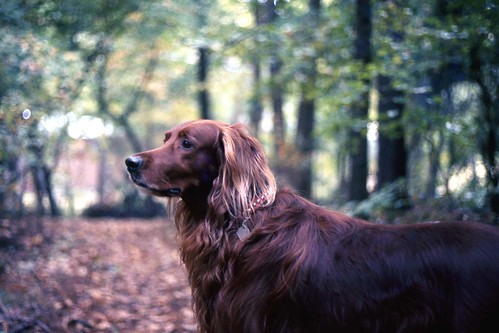
Animals on my mind today. I miss you big guy! More Clancey Pictures.
Today's Quote: Truth
"I don't want to dismay anyone, but Truth harasses me this morning..." Vicki Hearnes, Animal Happiness
Thursday, April 16, 2009
Today's Lyric: Blue
When the red sun
Disappears from the sky
Raven feathers shiny and black
A touch of blue glistening down her back
Blue "
Lucinda Williams, "Blue"
Lucinda Williams, "Blue"
Male Birch Catkins in Azalea Glow
 My Backyard, Easter Sunday, 2009 - I love catkins of all kinds - and cats too.
Monday, April 13, 2009
Corduroy in Grass on Easter Sunday

The camera spooked him but he hung in there for this shot! Corduroy is my bud.
Saturday, April 11, 2009
Today's Lyrics: A Living Prayer
A living prayer, my God to Thee"
Alison Kraus, "A Living Prayer," written by Don Block
Today's Quote - about Clouds
"…up above, what wind-walks! what lovely
behavior
Of silk-sack clouds! has wilder, wilful-wavier
Meal-drift moulded ever and melted across skies?"
Today in Greensboro it is windy and cool with bright white clouds skimming across the skies from west to east all with the same “floor” or altitude.
Although it was Autumn, Hopkins was noticing a similar thing. The excerpt above is from Hopkins’ great poem, “Hurrahing in Harvest,” this part being about clouds skimming across the sky.
Hopkins liked coining words that fit his need for meaning and meter, and such is wind-walk. The idea, I think, is that of the wind moving the clouds in rank or formation, as soldiers might march across a field. Kind of like outside my window right now.
The clouds seem to be both soft and delicate (like silk), and rough and ready (like sack cloth), at the same time – hence “silk-sack.” These “silk-sack” clouds, “wind-walking” through the skies are "wild and" “wilful,” as in headstrong and unpredictable.
I am reminded of lying on my back with my daughter, back when such things interested her, and watching the clouds, making out the shapes with her. How fast they would change! The dog's head would last just a moment before dissipating or crashing into another shape. There is an exciting unpredictable quality to clouds.
These clouds remind Hopkins of white flour or “meal” as they drift across the sky, ever changing – molding and melting (coming together, coming apart) – as they go (again, like the clouds outside my window).
As to how Hopkins responds to this – next time.
Dark Saturday
Today on this Easter Saturday we as Christians find ourselves caught between Good Friday, which we now celebrate as that great and glorious day when our redemption was secured in and by the death of Messiah Jesus, and Easter Sunday, which we celebrate as that great and glorious day when death itself was defeated in the resurrection of Jesus.
But the disciples on their Saturday before the first Easter looked back to Friday as the day their world came crashing to an end, and ahead to Sunday as only another day to adjust to life with Jesus gone.
Easter Saturday was a very dark and lonely and hopeless day almost 2000 years ago for the disciples. They were shaken with grief, scared for their own lives, humiliated, bearing the burden and excruciating disappointment of dashed hopes. It seemed they had been wrong about Jesus. They thought he would bring in the kingdom. They thought he would restore Israel’s fortunes. OK, Jesus had said that he would be taken, that he would suffer, that he would die as a ransom for many, but these words had never sunk in, had never quite broken through the wrong assumptions of the disciples. And now it was a dark Saturday. Jesus was gone.
Given this state of mind, and despite all Jesus had said, when the news broke on the morning of the first day of the week that Jesus was alive, it couldn’t have been more unexpected. Or electrifying…Or transforming...
But, back to Dark Saturday...
Sometimes we feel a little like the disciples on that Dark Saturday. Our most cherished hopes are crushed, and the detritus of our dreams are strewn around us as inescapable reminders of our frailty and failure. Living in the present we cannot yet see through to tomorrow or the day after that, and when we try to project forward we may only be able to imagine a cruel extension of the present darkness.
It is hard for us, 2000 years after the first Easter, to imagine just how dark that Dark Saturday was for the disciples and many other friends and followers of Jesus.
And thus, not having walked through these dark places with the disciples, it is also very hard for us to wrap our minds around the earth shattering nature of what came about the following morning, when hopelessness was replaced by hope, sadness by joy, darkness by light, confusion by clarity.
Sometimes we have to sit in the darkness to appreciate the light, or know hopelessness in order to understand hope, or feel utter gloom before we can know real joy.
We are taught as Christians to identify with the sufferings of Jesus. On this Dark Saturday I am inclined to remember the sufferings of the disciples. Remembering that, and relating to it, it makes the events of Easter morning more unexpectedly wonderful.
But the disciples on their Saturday before the first Easter looked back to Friday as the day their world came crashing to an end, and ahead to Sunday as only another day to adjust to life with Jesus gone.
Easter Saturday was a very dark and lonely and hopeless day almost 2000 years ago for the disciples. They were shaken with grief, scared for their own lives, humiliated, bearing the burden and excruciating disappointment of dashed hopes. It seemed they had been wrong about Jesus. They thought he would bring in the kingdom. They thought he would restore Israel’s fortunes. OK, Jesus had said that he would be taken, that he would suffer, that he would die as a ransom for many, but these words had never sunk in, had never quite broken through the wrong assumptions of the disciples. And now it was a dark Saturday. Jesus was gone.
Given this state of mind, and despite all Jesus had said, when the news broke on the morning of the first day of the week that Jesus was alive, it couldn’t have been more unexpected. Or electrifying…Or transforming...
But, back to Dark Saturday...
Sometimes we feel a little like the disciples on that Dark Saturday. Our most cherished hopes are crushed, and the detritus of our dreams are strewn around us as inescapable reminders of our frailty and failure. Living in the present we cannot yet see through to tomorrow or the day after that, and when we try to project forward we may only be able to imagine a cruel extension of the present darkness.
It is hard for us, 2000 years after the first Easter, to imagine just how dark that Dark Saturday was for the disciples and many other friends and followers of Jesus.
And thus, not having walked through these dark places with the disciples, it is also very hard for us to wrap our minds around the earth shattering nature of what came about the following morning, when hopelessness was replaced by hope, sadness by joy, darkness by light, confusion by clarity.
Sometimes we have to sit in the darkness to appreciate the light, or know hopelessness in order to understand hope, or feel utter gloom before we can know real joy.
We are taught as Christians to identify with the sufferings of Jesus. On this Dark Saturday I am inclined to remember the sufferings of the disciples. Remembering that, and relating to it, it makes the events of Easter morning more unexpectedly wonderful.
Thursday, April 09, 2009
Today's Quote: Peace
"And when Peace here does house...
He comes with work to do, he does not come to coo,
He comes to brood and sit."
from "Peace" Gerard Manley Hopkins
He comes with work to do, he does not come to coo,
He comes to brood and sit."
from "Peace" Gerard Manley Hopkins
Today's Lyric: Come to Me
"Come to me like when the rain falls,
like the arrow from the archer,
let the wind behind the stars call me from
points of my departure"
from Points of My Departure, The Vigilantes of Love, off Slow Dark Train,
like the arrow from the archer,
let the wind behind the stars call me from
points of my departure"
from Points of My Departure, The Vigilantes of Love, off Slow Dark Train,
Downtown Columbia: What's Wrong with This Picture

Downtown Columbia, from State House grounds
Look closely...What's wrong with this picture...
Wednesday, April 08, 2009
Todays Lyric: from Bill Mallonee
In these days of toil and trouble
How much of this is failing flesh
How much a course of retribution
My, my, how loudly we plead our innocence
Long after we made our contribution
Bill Mallonee and The Vigilantes of Love, from "Resplendent," on Audible Sigh
Todays Quote: Steve Turner
"One of the great hindrances to the development of biblically informed mainstream art has been the perception that Christians should make “Christian art” and that “Christian art” is always explicitly religious." Steve Turner, from “Imagine: a Vision for Christians in the Arts.”
My Two Grandmothers
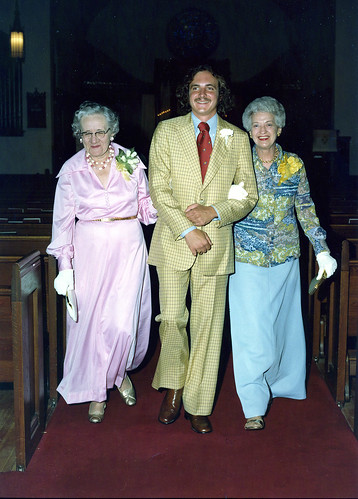
My brother Mike and my two grandmothers. I LOVE this picture - check out that suit. Dude!
Adeline Sanders (my mom's mom)
Michael Curtis Gillespie (my brother)
Mary Sue Gillespie (my dad's mom)
At Bobby's Wedding I think, late 70's
Monday, April 06, 2009
Today's Lyric
"I can't even remember what it was I came here to get away from."
Bob Dylan, Not Dark Yet, from Time Out of Mind
Bob Dylan, Not Dark Yet, from Time Out of Mind
Today's Quote
"But Francis (of Assisi) held neither to transmigration of souls nor to pantheism. His view of nature and of man rested on a unique sort of pan-psychism of all things animate and inanimate, designed for the glorification of their transcendent Creator, who, in the ultimate gesture of cosmic humility, assumed flesh, lay helpless in a manger, and hung dying on a scaffold."
Francis Schaeffer, Pollution and the Death of Man.
Francis Schaeffer, Pollution and the Death of Man.
Days Gone By

My 'lil sis Mary, in Nanny's yard, Columbia, SC., app 1961, Holding Camelia, Pink Perfection I think.
I like the dreamy quality of this picture, enhanced somewhat by being a little out of focus. And those eyes!
See my photostream
Sunday, April 05, 2009
Today's Lyric
"So excuse me forgetting but these things I do
You see I've forgotten if they're green or they're blue
Anyway the thing is what I really mean
Yours are the sweetest eyes I've ever seen"
Elton John, Your Song
Today's Quote
"Our generation is hungry- hungry for love, for beauty, for meaning. The "dust of death" covers all. And as in Jeremiah's day, there is with us the unsatisfied longing for a sufficient comforter."
Francis Schaeffer, Death in the City.
Yellow Jasmine

Gelsemium sempervirens
Jasmine also spelled "Jessamine"
This beautiful evergreen vine and floral array also known as Carolina Jasmine
The state flower of South Carolina
Saturday, April 04, 2009

Today's Lyric
"But words and music can never touch the beauty that I've seen looking into you - and thats true."
from "Looking into You," Jackson Browne
from "Looking into You," Jackson Browne
Today's Quote
"Mine, O thou Lord of life, send my roots rain."
from "Thou Art Ineed Just," GM Hopkins
Friday, April 03, 2009
It Worked! Hello Beau!

A few weeks back I published a list of ten people that I had lost track of in life, a piece called Does Anybody Know These Friends of Mine?" One of the folks listed was Beau Coxe (incorrectly spelled "Bo Cox"). Well, lo and behold, Beau called me last night from his home near Atlanta. Apparently his sister had done a search and stumbled across my pictures of Beau from our SC bicycle trip in May 1977. She called Beau and he called me. We talked a long time, and will talk again soon. Sometimes the internet is just plain cool.
The picture above with the story below is one of the great memories of that trip - crazy kids in their youth!
"We were riding over a very long bridge between Beaufort and Hilton Head, across a very large river inlet, and we stopped to look. We debated about jumping. There was a pole running up an abuttment and we thought we could climb up that. Beau said he would go first to show us the way. We were maybe 20 feet above the water. Anyway, Beau went under and popped up about 50 feet upriver as the tide was coming in hard. It took all his strength to swim back to the abuttment. On the way up the pole the pole broke and he fell back into the water with no way to get up and about a mile from land. A fishing boat came up, cursed us out for being stupid fools, and threw us a rope. We pulled Beau up by the rope."
Today's Lyric
"Wish I didn't know now what I didn't know then"
Bob Segar, "Against the Wind," from the album Against the Wind
(a great song about life - I like Segar more and more as I get older)
Bob Segar, "Against the Wind," from the album Against the Wind
(a great song about life - I like Segar more and more as I get older)
Today's Quote
"What is all this juice and all this joy?
A strain of the earth's sweet being in the beginning
In Eden garden."
GM Hopkins
"Spring"
A strain of the earth's sweet being in the beginning
In Eden garden."
GM Hopkins
"Spring"
Thursday, April 02, 2009
Wednesday, April 01, 2009
Tuesday, March 31, 2009
Sunday, March 29, 2009
My Favorite Potrait of Mom, Updated
 A kind soul downloaded and worked on a photo of my mom, and sent it to me via e-mail as a tribute to her. I think this is pretty cool. Check out the original photo.
Subscribe to:
Posts (Atom)


 Posts
Posts