Pages

Friday, January 06, 2012

Sweet Bay

What a beautiful South Carolina January day it is today! I hope that you are able to get out and enjoy some of it! As for me, I am home bound for a few days while my work van has some transmission work done. Fun...But, I am taking advantage of the down time by doing some planning/design work and a lot of that admin stuff that goes with having a small business.

Recently I had opportunity to recommend to someone a Sweet Bay tree. I was looking it up online in order to e-mail pictures when it dawned on me that there are actually four separate plants that use the common name "Sweet Bay."

I first learned of "Sweet Bay" in Dr. Wade Batson's renowned Spring Flora class at USC back in '79. We had visited a "Carolina Bay" site in the coastal plain. These Carolina Bay areas are rich in botanical diversity, and there I first came upon the "Bay" or "Loblolly Bay" or "Sweet Bay" tree. This has been the "Sweet Bay" tree in my head all these years.

Thus I have had some confusion since, as I said, there are in fact four different species of plants found in our area that may go by the name "Sweet Bay." And the most common one is not even the Sweet Bay of Carolina Bay fame.

The four kinds of "Sweet Bay" are:

1. Sweetbay (Magnolia virginiana) (Magnolia family) - Swamp Bay, Laurel Magnolia - native (Check out the Duke and Wikipedia articles).

Many cultivars of this the most commonly planted Sweet Bay have been developed for gardens. It is a wonderful plant.

2. Loblolly Bay (Gordonia lasianthus) (Tea family) - Holly Bay, Black Laurel, Summer Camellia - native ( see the Duke see and Wikipedia articles.

This is the the Sweet Bay I first learned about in botany class. It is a beautiful and wonderfully fragrant native tree and one I wholeheartedly recommend for local gardeners.

Loblolly Bay (Theaceae, Gordonia lasianthus)

(Photo from Flickr site of hdescopeland - photo and text posted 2 August 2009 revised 2 October 2010).

3. Swamp Bay (Persea palustris) (Laurel Family) - Swamp Redbay, Sweet Bay - native (note the Duke and USDA write ups).

This is a small tree native to the coastal plain and which I also learned of years ago, but had lumped together with the Loblolly Bay.

4. Bay Laurel (Laurus nobilis) - Bay Laurel, True Laurel, Sweet Laurel, Sweet Bay - this bay tree is native to the Mediterranean. See see Wikipedia and Blog articles).

This is the famous culinary "bay leaf" tree and the least common of the "Sweet Bays" in our area. We are at the northern end of its range but it is planted here and has escaped and become naturalized.

Hope you enjoyed this trip down Sweet Bay Lane.

Joel

Sunday, January 01, 2012

January Gardening

And the seasons they go 'round and 'round - and 2012 is here! Happy New Year!

January doesn't seem like such a great time to attend to gardening needs, it being so cold and all. But there really are a lot of things that can be done in January that will make a difference in the upcoming gardening season as well as make your garden more attractive in the mean time.

As for me, I just love being outside in South Carolina in the winter - gardening or walking or hiking, it doesn't really matter. The air is so clear this time of year, and the sky is so blue, and the pine trees so, well, green! Any chance I get to look up at a clear Carolina blue sky through pine trees is a treat for me. And did I mention no mosquitos and low humidity (and no wasps)! Some things just stand out better in winter, like tree bark, white Sycamore bark being the best example. And I don't know why but I like seeing those dangling Sycamore and Sweet Gum balls hanging on, or last spring's Tulip Poplar flower brackets pointing skyward high in the tree. Birds are easier to see in winter, especially hawks! Sometimes it's the crows yacking at them that alerts me to look up, but other times it's the Hawks themselves screeching. I've been seeing a group of three Red Tails all around the Forest Lake and Trenholm Road area - not sure if it's always the same three though.

Days getting longer always puts a little skip in my step. It's encouraging at many levels, and knowing that longer day length or shorter night length triggers various hormonal chages in plants makes it more fun to watch the season unfold.

But what I think I like the most about winter outside are the buds, as in tree buds and plant buds. Inside are the tiny leaves and/or flowers, either well-formed in miniature, or at least already differentiated as cells ready to take on full form. What energy the tree didn’t put into its seeds or store in its roots last summer and fall it has packed into these buds. Indeed, as last summer wound down, and the buds started to form which would lie dormant over the winter, the tree “knew” to transfer important energy sources from the leaves to the buds. These buds are rich in energy which is why deer and other animals like to eat them. The softer tissues of the buds are protected from the cold by tough bud scales. These scales leave scars when they fall off, scars which tell stories about how the twig has grown over the last few years.

OK, enough of that. Here are some good things to do in your garden in January...

Apply mulch - Mulch regulates soil temperature and moisture and does a great job suppressing weed growth in the spring.

Remove unwanted vines and trees - English Ivy competes with your shrubs for water and food and is easier to remove in the winter making way for proper bed maintenance in the spring. Although Wisteria is not an evergreen, it does not hide itself very well. It is actually easier to track down and get rid of Wisteria's underground runners (and root hubs) in the winter when access in and out of beds is easier. Green Smilax shoots are easier to see in the winter, and the tubers can be removed just as well in January as in July. Honeysuckle is not evergreen and the bark also gives it away. It can be yanked quite easily right out of the ground. Wild grape vines have very distinctive bark as well. These vines and others are so aggressive that they swarm your other plants in early spring faster than you can shake a stick. May as well get rid of them now. Winter is also a good time to remove some of the more common pesky large shrubs and trees such as Cherry Laurel, Ligustrum, Hackberry, and so forth. Even oak saplings are easy to see and remove, as they often keep some of their leaves in the winter.

Transplant - January is a good time to transplant shrubs.

Plant - January is a great time to plant a tree! Trees are good.

Clean up - One good thing about winter is that it is easier to see and remove those piles of bricks and concrete or rocks in the back of a flower bed, or old rotted landscaping timbers, or old planting pots hiding here and there. May as well get rid of that stuff while you're noticing it. It is a good time to remove dead wood from Azaleas or rake old leaves or old flower petals out from under Camellias.

Prune, Clip, and Trim - Obviously January is not the time to prune plants grown for their flowers (best to wait until after they bloom), but it can be a good time to neaten up ungainly hedges or prune tree limbs that are hanging over your shrubs. Boxwood can be selectively thinned in January and made more ready to fill out come spring. Some shrubs like Camellia Sasanqua that bloom in the fall can be pruned safely in January. Winter can also be a good time for neatening up non flowering hedges. Why be anoyed all winter by ungainly shrubs? January is a good time to trim back monkey grass, get rid of the dying stalks and leaves of last year's daylilies, cut back Ginger Lilies falling all over each other (and other plants), remove old Lantana stems, and so forth. OK, there are opposite views about when to cut back Lantana. Personally I do not think the very slight risk of water seeping into a cut stem and causing rot or fungal problems outweighs the unslightliness of gangly Lantana stems. I am actually not convinced that cutting back Lantana in the winter increases the chance of disease or cold damage, especially if one gives the crown area a good blanket of mulch. Some of the same arguments apply to Ginger Lilies and other plants. If Ginger Lilies are lying over other plants or lawn I would cut them now, and if not I'd wait until late February.

Prepare Soil - January is a good time to start to get the ground ready for a spring planting of vegetables. Bacteria and worms don’t stop working in our mild winters when the soil rarely freezes, and late fall (I think of December before Christmas as late fall) is an active time for worms and bacteria to work on decomposing leaves and enriching soil. Turning the soil in a planting bed, especially if it has some leaves or leaf litter covering it, can be a good way to prep the soil for an early spring planting.

Water - Remember to water in winter. Not only do plants still need water to live, but keeping the soil watered helps ameliorate the impact of a cold snap, just as putting water on peach buds during a hard freeze can help save the buds!

Plan - January is a great time to start thinking about and planning for the spring. Since we begin to get a lot of new growing activity by late February, Spring can sort of sneak up on us here in Columbia and by the time we’re ready for it we may have missed a window of opportunity. Best to get out the garden books and catalogs and start planning now, rather than then.

Of course I am available for these and other garden tasks. PLEASE feel free to forward this link along to anyone that you think could use my services - Columbia, Greensboro, and other select towns in the Carolinas.

Thanks,

Joel

Wednesday, November 30, 2011

December Gardening

It is hard to believe that December is upon us, but it is, and it is starting to get colder, and getting dark ever earlier, and holiday season signs are everywhere.

I suspect with all the stuff to do for Christmas, and Christmas parties to attend, and given the cold starting to descend upon us, that a lot of us take a break from thinking about our gardens. But there are actually some useful things to do in the garden in December.

December is a super time to transplant. Now that we have had or will soon have a couple of decent freezes plants are falling to sleep - going into dormancy (kind of like animal hibernation) - which means first that there is less transpiration going on (none in deciduous trees and shrubs obviously) and thus much less demand being put on the roots by the leaves to get water (for photosynthesis), and second, that the plant is not going to sprout new shoots and buds if it is cut back somewhat. This means that when we transplant at this time of year it is much less traumatic for the plant. But plant roots do grow slowly over the winter and so that when the weather does heat up in the Spring and the plant comes out of dormancy it has had a chance for its roots to set and is in better shape to survive its first summer.

December is also a very good time to plant shrubs and trees, many fruit trees, some hardy perennials, and some bulbs.

December is a good time to get rid of vines and tree saplings that have been taking over the garden. Even with deciduous vines it is actually quite easy to see them this time of year, and much easier to see some evergreen vines. Now is a perfect time to take out English Ivy. English Ivy is an ongoing maintenance challenge and it also competes with shrubs for water and nutrients. Pulling Ivy out is less stressful on the plants around it when the pulling is done in cooler weather. One thing I have noticed is that when Spring does finally come many vines like Wisteria take off so fast, that before we wrap our heads around the fact that it is Spring the vines have already wormed their way through our shrubs and bushes. And we look, and sigh...

December is a good time to apply mulch to boxwood, azaleas and many other shrubs, especially after cleaning out old plant litter and dead wood. Since it also a good time to apply a light feeding to many shrubs (to help root growth over the winter) some folks like to use a mulch like Dixie Mix, or to sprinkle a slow release granular fertilizer in with say shredded hardwood bark (my favorite mulch for around here).

December can be the right time to prune of cut back unsightly overgrown foundation plants, especially those whose flowering buds are not already set. One could argue that February is better, but if you just don't want to look at an overgrown or unsightly bush or row of bushes all winter it won't do any harm to prune it now since the plant is dormant. Boxwood too can be selectively pruned now to allow in more light and air which will stimulate bud growth in early Spring.

December is a good time to start to get the ground ready for a Spring planting of vegetables. Bacteria and worms don't stop working in our mild winters when the soil rarely freezes, and late fall (I think of December before Christmas as late fall) is an active time for worms and bacteria to work on decomposing leaves and enriching soil. Turning the soil in a planting bed, especially if it has some leaves or leaf litter can be a good way to prep the soil for an early Spring planting.

Remember to water in winter. Not only do plants still need water to live, but keeping the soil watered helps ameliorate the impact of a cold snap, protecting plant tissue much as putting water on peach buds during a hard freeze can help save the buds!

Best of all, December is a great time to start thinking about and planning for the Spring. Since we begin to get a lot of new growing activity by late February, Spring can sort of sneak up on us here in Columbia and by the time we're ready we may have missed a window of opportunity. Best to get out the garden books and catalogs and start planning now, rather than then.

I hope you enjoyed reading this. As always I am available to help however I can.

Maybe you have some other ideas to share about gardening in December - especially here in the midlands of SC.

Happy December...

Joel

Wednesday, October 26, 2011

Sasanqua

Folks have been saying that this is not going to be a great fall for leaf color, but it is sure a great fall for Camellia Sasanqua color. I don't remember the Sasanquas ever being so prolific. I fondly think of my former Organic professor Dr. Teague when I pass by his old place at the corner of Adger and Trenholm and see the long row of beautiful Sasanquas there along Trenholm. And yes, all Sansanquas are Camellias but not all Camellias are Sasanquas.

Tuesday, September 06, 2011

Anticipation

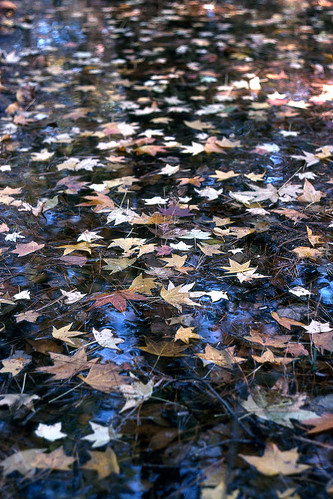
Sweet Gum Leaves on Pond in Columbia

Sunday, July 17, 2011

Sunday Thoughts


An amazing thing happened this past week. I started to like watching soccer, thanks to the US Women's World Cup team. Really, I didn't think it was possible.

This has been a fun sports summer - the dramatic nail biting South Carolina baseball championship run, the Dallas Mav's victory over the Heat, and the Women's World Cup win over Brazil.

It was cool sitting up on the high side ledge of the State House with Laurel and Brett the other evening. Every time I go up there I think of the iconic 1865 photo taken from the State House steps down main street after Columbia burned. The drama, beauty and horror of history just oozes there. I do love my home state.

It was uncannily cool and pleasant that evening. We went to Five Points after and hung out at the fountain. I was a good time.

I start PT this next week on my right leg. I may have starting working too soon after the surgery and before I built up adequate strength in my leg muscles. There is so much pulling, twisting, stumbling, bending footing, uneven terrain and so forth, it's hard not to tweak the knee again and again, especially the strained/weak MCL. I still have a hard time on stairs, throwing a baseball or frizbee, getting in and out of cars, things like that. I need to focus on PT and building up strength and somehow avoid reinjury. Hmmm.

I don't know where I'd be in my faith and relationship with God if it were not for "Jesus of Nazareth," the book (and the person). I read it when I awake in the night and reach for it when I get up. I am not Catholic, and will never be, but I will always owe a debt of gratitude to the man who wrote this book.

Speaking of Jesus, I do pray for a deep visceral awareness of Jesus' presence. I know He says "I will never leave you or forsake you" and I believe that; I just want Him to come in and overwhelm me, shake me up, do a number on me.

I stayed up too late last night, of all things, watching biology and calculus videos on the Kahn Academy web site. I read about Khan in a Wired Magazine article. More and more teachers are using Khan's videos, enabling them to focus more time in class on helping students with problem solving, flipping the traditional classroom/homework pattern. It's a good read.

Khan reminds me a little, well, of me actually. I wish I had had his idea! Gosh, 53 years into this life and I am still such a geek! I have become way more well rounded over the course of my life in history and literature but I do find a childlike joy in math and science. Memories and Mrs. Henry and Mrs. Carpenter and Mrs. Short...It just makes me chuckle at myself really.

However it works out for me getting through this rough spot and moving forward hopefully with a job, it won't be due to undaunted courage on my part, or great cleverness, or even hard work (though there has been plenty of that) - it will be due to the love and help and encouragement of friends, my family here, and my daughters. Those who have helped and encouraged me know who you are, and I will be thankful for you the rest of my life.

All for now...

Monday, June 06, 2011

Downed Poplar, Snapping Turtle, Chuck Berry


Today I worked again at Nandina Hills. The Hills have had a tough couple of weeks. About ten days ago a storm uprooted a huge double trunked Tulip Poplar which fell toward the house from 80+ feet away, and quite a ways lower in elevation. The crown of the Poplar tore holes in half the length of the roof (of a house three stories in height the base of which was already quite higher than the base of the tree) and sent limbs through the roof into various upstairs rooms. This was a seriously big tree, possibly close to 150 feet in height. There was a hole about 15 feet across and 6 or so feet deep from the root ball.

The next week another smaller Poplar went down in the other direction across the fence into the neighbor's yard.

The yard also has the tallest Sweet Gum tree I have ever seen outside of Congaree Swamp. Hope it stays put.

I got to play with a very big Snapping Turtle today. His (or her) carapace was maybe 16 inches long and he was chillin' in a little temporary pond formed after the rain. Apparently he has taken up residence on the property. It's quite possible he was/is as old as I am so wanted to afford him all due respect, but I couldn't resist getting him to snap a few sticks of various sizes in two, nor could I resist picking him up a little by his shell and watching his huge legs flail.

I was kind of hoping to see a Water Moccasin today...OK, well, maybe not...but I was worried a little about them given all the frontage on the headwaters of Forest Lake near to what we used to call the "second spillway" growing up in the hood. A lot of water was pouring through the spillway today.

My knee held up pretty well, especially given the extremely hilly and rocky and generally uneven terrain. I tweaked it a few times but not badly.

No deep thoughts today - was just glad to get through the day OK...


Sunday, June 05, 2011

Setter, Church, All Time is Present to God

I was waiting at the light at Trenholm and Forest Drive yesterday behind an SUV, and sticking his head out of the back window was an Irish Setter who looked a lot like Clancey. I haven't seen many Irish Setters lately and kind of wonder if the breed has gone out of favor. It was nice to see an Irish Setter again. Here's a picture of Clancey...

Clancey Wet

I should be in church right now I suppose. I don't say the following for sympathy and it feels kind of pathetic/loserville-ish to admit it, but going to church these days is just hard. I usually spend the time dealing with a flood of emotions rather than focusing on worship/word/fellowship, and find myself looking to get out as quickly as possible so I don't have to talk to anybody. I hope that, before too long, maybe after the dust is settled, it will be different.

I worked hard in the sun yesterday and though I was somewhat winded my knee held up pretty well. There are still things I can't do and I have to build endurance but I am optimistic.

I worked in a yard in which the homeowner grew up, and which has become overgrown, and I uncovered a whole bunch of items that seemed to tell a story of years past - young children at play and gardening projects mostly. It doesn't take long before vines and trees cover up our histories. It is wistful to think of stories told by these items, and the memories embodied perhaps in them, but noticing this history adds meaning to my work. It's not long before the memories of our lives fade entirely. That would seem very depressing to me except that I do think our memories are held intact in the mind of God to whom and for whom all time is present tense. So, oddly, imagining Him seeing and knowing and understanding these life stories and "seeing" them "now" is comforting.

Well, maybe I'll make church tonight somewhere...

Friday, June 03, 2011

Storms, Four O'Clocks, and Overalls

The storm Thursday night in Columbia was the fiercest I have seen in years. Two large oak trees snapped in the property behind my sister's house and took wires down with them. The wind had that loud whooshing sound it has when you worry about worse things...

I love sitting out in the carport or on a porch watching and listening to storms. This was a favorite past time of me and my dad when a good summer storm would whip up - and the more thunder and lightning the better. In later years in Greensboro I enjoyed standing on our little front porch with my daughters during a good storm - and sometimes when threat of lightning was passed running around in the rain!

I never realized how much I loved and missed the sound of wind rushing through tall Loblolly, Shortleaf, and Longleaf Pine trees. It's different. I like it.

Just before the storm hit the Trenholm Plaza area yesterday I spent an hour with a new friend and customer who lived nearby, walking around her garden and talking about what she would like to do in this place or that. In her back garden she had mostly white and blue flowers. I suggested she consider an old favorite of mine, a beautiful flower and plant I enjoyed as a child - Four O'Clocks, and white ones in particular. Four O'Clocks have beautiful foliage, a lovely flower that opens late in the day and through the night, and what I think is a wonderful and unique aroma.

And then there are the seeds, the little black hand grenade-looking seeds that are so easy to collect and sort and replant. I used to collect them in Dixie Cups as a kid, each cup labeled by the color of the flower from which the seed came.

Four O'Clocks grow in sun or part shade. They grow seemingly as an annual but propagate from their seeds and come back each year from an underground tuber.

I told the nice lady that I'd send her a picture of Four O'Clocks, but the only pics I could find had me in them! Here is one from 1977...

Joel and Four O 'Clocks 1977

I think overalls need to make a fashion comeback. Maybe if I lose 30 pounds they will look even cooler on me...Yes maybe my true calling is to be an overalls model...:-)

Wednesday, June 01, 2011

First Day of Summer


OK, I know the "official" first day of Summer is June 21, the day of the Summer Solstice, but in Columbia SC the season of Summer starts before that. I think of Summer as June-July-August, but maybe that's just me.

I started working again today two weeks after my knee surgery. It felt good to be working again. I am out of shape just from the three week lay off. OK, in fairness to myself it was 95 degrees today. Seems like it was still very much Spring when I stopped working before the surgery.

It is very nice to walk around again without constant pain. Rummaging around in beds filled with vines and debris it is hard not to stumble here and there, and I did tweak the knee a bit, but not too badly.

I am so thankful for the friends who made it possible for me to have the surgery.

My nephew Sanders worked with me today, and will over the summer. He is a good worker. He had the privilege of digging out several stumps - just some good old fashioned hard work. I think he liked it.

Yesterday I sat outside with a wonderful 85 year old woman and talked about life and death and kids and gardens and marriage. I was able to enjoy eating a bunch of Loquat fruit while we talked - they were awesome!

She told me stories about the various trees and bushes and statues in her yard, where they came from, which she planted, and so forth. It was pretty obvious that going outside and sitting in that special place under her River Birch and Loquat trees caused some anxiety for her because of how overgrown everything has become. I am going to help her reclaim her beautiful garden from Wisteria and other assorted vines and trees so that that she can sit outside and feel peace and not anxiety. That is the best thing about what I'm doing now.

I didn't tell her much at all about my situation, but I guess she has been around the block over the course of her 85 years. After I walked her back into her house, and as I turned to go to my car, she said (something like), "There is someone out there who will love you...for who you are."

That kind of made me smile.

Monday, January 24, 2011

Red Brick and Windows

Brick

Taken in downtown Columbia SC on Main between Lady and Washington.

Sunday, January 09, 2011

Red and Yellow Black and White ( and all combinations thereof!)

On Saturday I did something I had not done in a long time - I went to the mall, as in Four Seasons Town Center, Greensboro. Madeline and I were hanging out and she suggested it. I have to admit that it was kind of fun.

I was surprised at how crowded it was. We had to park way away from the entrance. And it was indeed very full of people. There seemed to be a lot of big post-holiday sales going on, but I then don't really know if that's why it was so crowded.

Madeline disappeared into several stores and I spent a fair bit of time hanging out by the interior railing on the second of the three floors just watching people. I have to say it was an oddly interesting and positive experience. Abd that's coming from a guy who pretty much hates malls.

Both interesting, pleasing and somewhat encouraging was the amazing diversity of the people. I didn't do any counting but the crowd appeared about equal parts White/Caucasian, Hispanic, and African American, with a significant number of Asian - mostly East Asian but lots of folks from the Indian Subcontinent. Some of the "Asian" people looked like maybe they were indigenous people of Central or South America. I guess that is a kind of Asian. Anyway, it was quite the potpourri!

There were very few groups of wandering young males of any color. It appears that the mall staff is working hard to make the place safer and less threatening to its visitors. That is fine by me.

There were all sorts of mixes of family groups - couples, large families, older parents with children and grandchildren, one parent with child, etc. There were lots and lots of kids of all sizes and skin colors - well, actually there were lots of adults of all sizes and skin colors too! There were also many racially mixed couples - pretty much every sort one could think of. People seemed kind of happy and chill and totally unbothered by all the folks of other ethnicities.

I kept thinking of all the stories of how so many of these people from so many places on earth got here. And to think of where we have come in the last four or five decades! I mean, I did not pick up on the slightest tension in the crowd - everyone really seemed so chill and at ease. Wow have we come a long way!

If this is where our nation is heading it is certainly alright with me! There was something in that crowd that seemed to me so quintessentially American it just made me feel good, good about being at the mall that day, and good about our nation.

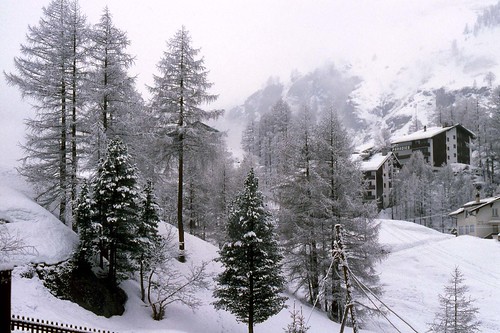
Thinking (again) of Snow

Zermatt - So Much for Seeing the Matterhorn - March 1978

Zermatt - So Much for Seeing the Matterhorn - March 1978

Wednesday, January 05, 2011

Professor Sargent

Professor Sargent Camellia II

Red Professor Sargent Camellias were in full bloom yesterday, January 5, in Columbia, in the Forest Lake area were I was working. This is not a noteworthy photograph. I took it mostly for getting the gist. The particular flower is not as deep red as the variety tends to be, is a tad cold-burnt, and has a glare off the petals from the direct sun.

Professor Sargent is a wonderful old heirloom Camellia variety - kind of peony-like, and perfect as a cut flower.


Sunday, January 02, 2011

January Gardening

I know that January doesn't seem like such a great time to attend to gardening needs, but there really are a lot of things that can be done in January that will both make a difference in the upcoming gardening season and make your garden more attractive right away.

Lest we gardeners feel like we're doing all the work, well...a whole-lot-of work is already being done by plants and bacteria and fungi. Spring gardening can be a lot more productive when we help natural processes along in the Winter and make things ready for a burst of life in the Spring. Better not to have the excitement of Spring ruined by fast growing Wisteria and other vines.

Here are some good things to do in January...

Apply mulch - Mulch regulates soil temperature and moisture and does a great job suppressing weeds. It is often best to apply mulch right on top of leaves and straw since they then provide superb nutrients for your beds.

Get rid of unwanted vines and trees - English Ivy competes with your shrubs for water and food and is easy to remove in the Winter making way for proper bed maintenance in the Spring. Although Wisteria is not an evergreen, it does not hide itself very well. It is is actually easier to track down and get rid of Wisteria's underground runners (and root hubs) in the Winter when access in and out of beds is easier. Green Smilax shoots are easier to see in the winter, and the tubers can removed just as well in January as in July. The bark of Honeysuckle vine is also easier to see in Winter. It can usually be yanked right out of the ground. These three vines are so aggressive that they swarm your other plants in early Spring faster than you can shake a stick. May as well get rid of them now.

Winter is also a good time to remove some of the more common pesky large shrubs and trees such as Cherry Laurel, Ligustrum, Hackberry, Oak, and so forth. Oak saplings normally keep their leaves in the Winter and they just stick right out against the brown background.

Transplant - January is a good time to transplant shrubs and small trees.

Plant - January is a great time to plant a tree!

Clean up - One good thing about winter is that it is easier to see those piles of bricks and concrete or rocks in the back of a bed, old rotted landscaping timbers, or vines wrapped all over a fence or tree trunk. May as well get rid of that stuff while you're noticing it!

Prune and Clip - Obviously January is not the time to prune most flowering plants (best to wait until after they bloom), but it can be a great time to prune tree limbs that are hanging over your shrubs. Plants need fresh air and light.

Winter can also be a good time for neatening up non flowering hedges.

Trim - January is a good time to trim back monkey grass, get rid of the dying stalks and leaves of last year's daylilies, cut back Ginger lilies fallen all over each other, remove old Lantana stems and so forth.

I of course am available for these and other garden tasks. PLEASE feel free to forward this link along to anyone that you think could use my services - Columbia, Greensboro, and other select towns in the Carolinas.

Thanks,

Joel

Saturday, January 01, 2011

Madeline and Boots

Boots and Madeline

Monday, December 27, 2010

Greensboro Christmas Snow

Greensboro Christmas Snow 2010

Thursday, December 16, 2010

Joel's Rainy Winter Day Special

Hi Friends,

As the days get colder and wetter the gardening work is slowing down - and I await the new season. In the spirit of "any work is better than no work" I just want to put this out there, and ask you to consider sharing it with anyone you think interested...

I will spend a traditional work day INSIDE and do about anything I am asked to do that is legal and moral and that I am capable of doing - for $100. Anything. I am NOT a skilled handy man so I can't fix your washing machine or your plumbing, but other INSIDE work like cleaning, moving things, running errands, painting, baby sitting, chauffeuring, sanding, scrubbing, polishing, clearing out attics, insulating, taking stuff to Goodwill I can do. I could also clean up/degunk your computer, rip that pile of CD's to your hard drive, write letters, edit stuff - whatever I can do inside. If I need to drive my car as part of the work I will ask for a per mile reimbursement at standard IRS rates. I am happy to work along side or work alone...So...if you know someone who could use something like this pass it on...

As far as outside gardening work at regular rates, winter is a good time to mulch, clear away Ivy and Wisteria and unwanted saplings, transplant, plan, and so forth.

If you have or know anyone who has a child who needs tutoring in math, science, or English composition, bible or theology let them know about me. I'm pretty good at that if I may say so myself. I am a currently licensed teacher in North Carolina and can provide references.

Thanks!

Joel

Tuesday, December 07, 2010

Lessons from Nanny

Nanny's Backyard mid 50's, Looking Down from Top Terrace Towards Dixon's Back Yard

Every so often I get up the nerve to go by and look at my grandmother Nanny's old house on McGregor Drive. It takes nerve because even though the house itself from the front looks much the same, subsequent owners have taken liberties with the yard that upset me, so it's a mixed bag of emotions when I drive by.

The thing that bothers me the most is the removal of almost all off the Loblolly pines in the front and several in the back. The McGregor Drive Loblolly's are amongst the very largest in Richland County and I grew up adoring these behemoth trees. Nanny loved them too. She also knew that the pines were the lynch pin of the local garden "ecosytem." Cutting down canopy pines leaves Dogwoods and Azaleas with too much sun, and they become stressed and weakened as a result. It changes everything in a garden.

There is this irrational fear of pines near a house falling on the house. Much worse is when a pine not near a house falls on a house. Some people apparently fear pine limbs cracking in an ice storm and crashing through the roof and ceiling. It has happened. But I just don't know how people could buy a place like Nanny's and then with a wave of the hand dismiss its natural and human history like that, and dismiss those great old trees with a wave of the hand and a check to the tree service. It bugs me.

Had the same owners bought Nandina Hills (see article below) I could see them having all the inconvenient rocks hauled off, the place graded, and a barren pathetic little lawn planted on some measly flat place.

When it comes to gardening I appreciate it a lot when people work within the givens of their property. Large Loblolly pine trees are such a given. They determine how light and shade filters to the ground and thus the kinds of plants and trees that will grow well below. Slopes offer opportunity for gentle terraces and not unnatural grading. Creek bottoms create opportunity for entirely different plant and animal systems. I have always thought that it was better to work within the boundaries of what is given, the form before us, and try to make beauty come forth from that. Land is like genre in music, like meter in verse, like the configuration of the baseball diamond. It's what happens within the boundaries that makes great art. Respect the given. Respect the land.

Most of us don't buy houses built on newly cleared land. And thus most of us, when we buy houses, also inherit the choices and loves of others who have gone before.

There is an old bent Red Bud tree on our property in Greensboro. I happen to know the prior owner who planted that Red Bud and what it meant to him so over the years and through various transfigurations brought about by ice, lightening and bad pruning, the tree continues, gnarly as it may be. It would have taken two minutes to taken it down and made the lawn a lot easier to mow, but I chose to respect the choice of my predecessor.

Often when I am pruning an old shrub I can see how the plant has been pruned over time. That pruning has impacted the subsequent growth of the shrub and also impacts the current pruning. As I see that other hands have shaped this plant I am reminded that in most facets of life there are those that have come before, shaping and informing our current choices. We are no more blank slates than the houses we buy. We were born into certain situations and were shaped by many who came before, and we should respect their love and their effort. We may think we can cut out all traces of their influence upon us, which we cannot do, but even if we could we generally don't do such a better job than they did. Likewise when it comes to gardening I feel inclined to respect the work of my predecessor and thus his or her person and memory. Respect what has come before.

When we let "nature" take its course around here that usually means (in a garden) that Ivy, Kudzu, Grape, Smilax, and Honeysuckle (ironically most of which are non native and thus not really "natural" at all) will soon cover everything, beginning a very long and slow progression toward a mature forest appropriate to the region. Gardening does not respect the laws of natural succession. It is more concerned with nurture than nature, ideally striking a balance between the two (or maybe coming to a truce).

The shapes and colors and smells that make gardens so pleasing are cultural artifacts. They represent nuture. Gardening is an interference with the principle of entropy. It isn't "natural." It is an imposition. Much thought and energy and action must be applied to keep any space from "reverting" back to nature. But those who impose order and design have a responsibility over the whole. In my mind this responsibility includes respect - as considered above. This respect calls us to balance nurture with nature, that is, we respect the natural land forms and native ecosytems as much as we can. Slope and sun and climate all constitute aspects of that form inside of which the gardener creates. But since these factors also determine which species of plant that are most suitable, these "natural" or native species also constitute aspects of that form with which the gardener works.

I am not a zealot when it comes to native vs. non native species. Some of my favorite plants are non-native. But I have wandered the woods and worked in gardens enough to see the damage non-native-plants-gone-wild can do. And I care about ecosystems enough that it is not just plants that matter in a garden, but also insects and birds and other animal species. Urban and suburban spaces can have more of an impact than one may realize on the health of the native ecosystem, and can contribute to its health or to its slow demise.

But there is no such thing as a true "native" or "natural" ecosystem. If we could turn back the clock to find "original" would we go all the way back before the invasion of the continent by Asian peoples 10 or 15 thousand years ago? It is appropriate to be concerned about aggressive invasive plants and animals and to eradicate them when possible. But we have to be reasonable. Even the common lowly earthworm is a species alien to our fair land.

Likewise, the Southern Azalea and Camellia garden is not paticularly native. The imported Camellia has no more native right to a space than the Japanese Honeysuckle covering it up. But Camelias are not invasive. And as a long-time pillar of the Southern garden they call for my respect. My grandmother grafted and pruned and deeply loved her Camellias and I think of her often when I am trying to nurture an old overgrown (and grown-over) Camelia back to shape. Someone very much like her loved this plant for many years, and I respect that.

Nanny also loved her English Ivy. It too is a non native. One difference between the two is that whereas a Camellia left to itself will get gangly and sick and die, English Ivy left to itsef will take over everything. The same could be said - but worse - for Wisteria or Honeysuckle. As these plants take over and out compete native species which have a more direct relationship with local fauna, thus hurting the ecosystem as a whole. Even well-trimmed English Ivy creates problems for other plants, stealing water and nutrients and shading out leaves.

Nanny had Mr. Dove to keep her Ivy constantly trimmed. Most of us don't have a Mr. Dove and the Ivy (and Wisteria and so forth) slowly conquers our spaces. Better I think to get rid of the stuff altogether.

Not a great ending, but enough for now...

Sunday, December 05, 2010

Nandina Hills

I have been working off and on over the last few years on a beautiful home and property in the Columbia area near to where I grew up. This piece of land slopes down to a lake and has several smaller hillsides contained in it as part of the general irregular slope of the land. These hillsides are covered with large rocks, granite I think, many a couple of yards across. Working on the site has been a lot like playing on a mountain stream bed, hopping from boulder to boulder.

  Going 12-09-11 045

I asked the owner (who bought the house 50 years ago) about the rocks, thinking they must have been brought in as part of a design. No, he said, they were "native." Apparently there is a quarter-mile band of such rocks that runs across this area of the sand hills. I never knew about it even though I grew up not far away.

This property provides a perfect example of the work that I enjoy doing. Obviously much thought and love had once been put into the design and care of the plants and trees. Time and perfectly understandable neglect had taken its toll however. More recently a daughter has been working as much as possible on keeping up the garden and even adding some nice features to the place, but she is a busy person and things around here just grow so fast! Over the years many trees and shrubs have died. Much of this has been due to the loss of a large number of pines to pine borers, and a few giant tulip poplars to lightning and wind.

Vines of all sorts have swarmed the area choking out desired plants. Large saplings/small trees, many less than desirable, have sprung up all around. Many of them have themselves been covered in vines! Although for the most part this is not a typical traditional southern garden, there are many azaleas and camellias in one of the flatter and damper ares. I have done some pruning of dead and overly-gangly azaleas and camellias and am gradually bringing the area back to shape and health.

I have spent even more time trying to conquer the mass of native and non native vines and trees swarming the place like fire ants! Everywhere there is the familiar stuff that grows like mad here, the vines especially - English ivy, honeysuckle, vinca, potato vine, muscadine, moonseed vine, cucumber vine, five leaved akebia, fox grape, crossvine, trumpet vine, and smilax. There is also a lot of native switch cane (which I kind of like but which the homeowner does not), and which I have been digging out gradually. There had been a very large thick grove of honeysuckle bush which has now been tamed, and of course all those saplings - princess tree, mimosa, elderberry, cherry laurel, hackberry, maple, red bud and pine - everywhere. Since there is a large beautiful sweet gum tree on the site - one of the largest I have ever seen - there are thus also sweet gum babies abounding.

I have come across many dogwood stumps. Since the dogwood demise red bud has become the default under story tree, and the owner has wanted the red buds preserved. There are also lots of elderberry of which the owner is fond so have I left those too.

And then there is the nandina...Folks have different and often passionate thoughts about nandina. It is not native and can be invasive, choking out other plants, and the berries, so they say, are not as nutritious for birds as some other native berries. I can take or leave nandinas. But the nandinas have taken to these rocky hills like a fish to water and when they are in full fall regalia they are beautiful. After I cleared much of the unwanted stuff from the hillsides and cleared off ivy and honeysuckle from many of the rocks, and generally just made the place look less unruly, the nandinas have really stood out. And as the sun falls lower into the sky, these nandinas and their berries glisten in the glow. I have to say they are downright beautiful. You could call the place nandina hills or nandina acres!

  Going 12-09-11 021

 I once found several little clumps of wild ginger in damp areas between rocks here and there, and have taken care not to harm them. I also found and was able to save saplings of many interesting local trees like sassafras and black gum (the latter being my favorite tree).

Gradually this amazing property is starting to reflect its former glory, and that is very satisfying,